Love, Magic, and Mystery: The Enigmatic Female Doll Pierced with Thirteen Pins from Roman Egypt (Vodoo?)


In the quiet, dimly lit halls of the Musée du Louvre, among countless artifacts that tell stories of ancient civilizations, there lies a small but striking object that whispers secrets of love, desperation, and ancient magic. This object is a female doll, positioned in a kneeling pose and pierced with thirteen sharp pins. Alongside it was discovered a lead curse tablet inscribed with a love binding spell — a powerful relic from Roman Egypt, dating back to the 4th century AD.

This doll, simple yet chilling, offers a rare glimpse into the intimate and often turbulent world of ancient emotions, where love and magic were intertwined, and where the supernatural was invoked to influence the heart’s deepest desires.

The Doll: More Than Just a Toy

At first glance, the doll might appear as a mere toy or figurine. However, its posture — kneeling with hands likely clasped or raised — and the disturbing detail of thirteen pins driven into its body reveal its true purpose: it was a magical tool, an object crafted for a ritual of love binding.

In many ancient cultures, dolls like these were used as conduits to affect real people. By manipulating the doll, the practitioner believed they could influence the life and emotions of the person the doll represented. The number thirteen, often associated with superstition and power, was here likely intended to amplify the spell’s effectiveness.

The Lead Curse Tablet: Words of Ancient Magic

Accompanying the doll was a lead curse tablet, or defixio, a small sheet of lead inscribed with a spell meant to bind the affections of a beloved. These tablets were common in the Greco-Roman world and served as petitions to the gods or spirits to intervene in human affairs, especially those matters of the heart.

This particular spell is a love binding curse — a plea, or perhaps a demand, that the desired individual be irresistibly drawn to the caster. It reveals the emotional intensity and complexity of ancient relationships, where love was not only an emotional experience but also a battlefield for control, jealousy, and desire.

Roman Egypt in the 4th Century AD: A Cultural Melting Pot

The 4th century AD was a time of significant transition in Roman Egypt. The ancient Egyptian traditions coexisted and intertwined with Greco-Roman culture, creating a unique blend of religious practices and magical beliefs. Magic was not merely superstition but an accepted part of daily life, practiced by many across social classes.

The use of curse tablets and magical dolls reflects this rich tapestry of beliefs, where people sought control over fate and fortune through ritual. It also shows how personal and universal the experience of love was — transcending time and culture.

The Symbolism of the Doll and Pins

The pins piercing the doll were likely intended to 'bind' the person represented, preventing them from straying or resisting the spellcaster’s desires. Each pin may have symbolized a specific aspect of control or a particular barrier to love that needed to be pierced.

This physical act of piercing contrasts with the spiritual nature of the spell, illustrating how tangible objects and written words were combined to manifest a desired outcome in the metaphysical realm.

What This Tells Us About Ancient Love and Magic

The kneeling doll with its pins and accompanying curse tablet invites us to reflect on the timelessness of human emotions. It reminds us that love, with all its passion and pain, has always been a powerful force driving people to seek extraordinary solutions — whether through heartfelt pleas or mystical rituals.

It also challenges our modern perceptions of ancient peoples, showing us that beneath the grand historical narratives were individuals grappling with the same fears, hopes, and yearnings as we do today.

The Louvre’s Treasure: Preserving Stories of the Past

Today, this haunting artifact rests in the Musée du Louvre, where visitors can ponder its story and the lives it touched nearly 1,700 years ago. It stands as a testament not only to the art of ancient magic but also to the universal human quest for connection and affection.

Next time you visit the Louvre, pause by this small figure — the female doll pierced with thirteen pins — and imagine the story behind it: a story of love, desperation, and a world where magic was real enough to be grasped in the hands.

Read More

The Art of Imperfection: Miroslav Tichý and His Homemade Cameras


In the world of photography, perfection is often pursued through cutting-edge technology, precision lenses, and sophisticated equipment. But sometimes, true artistry emerges from the most unexpected places — and with the simplest of tools. Such is the story of Miroslav Tichý, a Czech photographer who crafted his own cameras from cardboard tubes, tin cans, bits of string, and whatever scraps he could find, creating thousands of haunting images over two decades.

An Unconventional Visionary

Born in 1926 in Kyjov, Czechoslovakia, Miroslav Tichý’s early life was shaped by the upheavals of World War II and the oppressive Communist regime that followed. Although he studied art at university, his artistic journey took a uniquely solitary and rebellious turn in the 1960s. Rejecting the constraints of formal art education and the commercialization of art, Tichý began building rudimentary cameras by hand — devices that were deliberately imperfect, flawed, and prone to distortion.

Using recycled materials — cardboard tubes fashioned into lenses, tin cans for bodies, and string as makeshift shutters — he created an arsenal of crude photographic tools. These homemade cameras were far from the polished equipment professional photographers rely on, yet they captured something raw and authentic. Tichý’s work was not about technical perfection; it was about capturing fleeting moments, emotions, and the intimacy of the everyday.

The Hidden Photographer

For nearly 25 years, from the early 1960s until 1985, Tichý wandered the streets of his hometown, Kyjov, taking thousands of photographs — mostly of women, whom he observed from a distance. He photographed through windows, fences, and from hidden vantage points, often using pinhole cameras that required patience and a unique kind of intuition. His pictures are blurry, grainy, sometimes out of focus or crooked, but that imperfection is exactly what gives them an ethereal, dreamlike quality.

Tichý’s photography was deeply personal and idiosyncratic. He never exhibited his work during this period and remained largely unknown outside his small town. In fact, he preferred to live apart from society, often regarded as eccentric or even a local hermit. His cameras, stored away in makeshift cases and old tins, were discovered only decades later.

Rediscovery and Recognition

It wasn’t until the late 1990s that the art world began to recognize Miroslav Tichý’s genius. Photographers and curators stumbled upon his work, drawn to its raw honesty and unconventional beauty. His photographs soon began appearing in galleries and exhibitions worldwide, earning acclaim for their poetic representation of voyeurism, memory, and the ephemeral nature of beauty.

Tichý’s art challenges conventional ideas about photography. His “imperfect” images force us to reconsider what makes a photograph valuable: Is it technical clarity, or is it the emotion and story behind the image? His work blurs the line between reality and imagination, inviting viewers into a world seen through his uniquely crafted lenses.


The Legacy of a Handmade Camera

Miroslav Tichý’s story is a powerful reminder that creativity doesn’t depend on expensive tools or perfect technique. With nothing but discarded materials and a determined spirit, he transformed humble objects into instruments of art that captured the complexity of human experience.

His homemade cameras — pieced together with cardboard, tin cans, and string — symbolize the essence of artistic resourcefulness and the pursuit of vision against all odds. Through these fragile devices, Tichý left behind a legacy of thousands of images that continue to inspire photographers, artists, and dreamers around the world.

In a digital age dominated by megapixels and instant sharing, Miroslav Tichý’s work calls us back to the tactile, imperfect, and deeply personal roots of photography. It’s a celebration of the beauty found in imperfection, and a testament to the power of seeing the world through one’s own handmade lens.

Read More

Mona Lisa of the Deep: The Mysterious Daguerreotype from the SS Central America


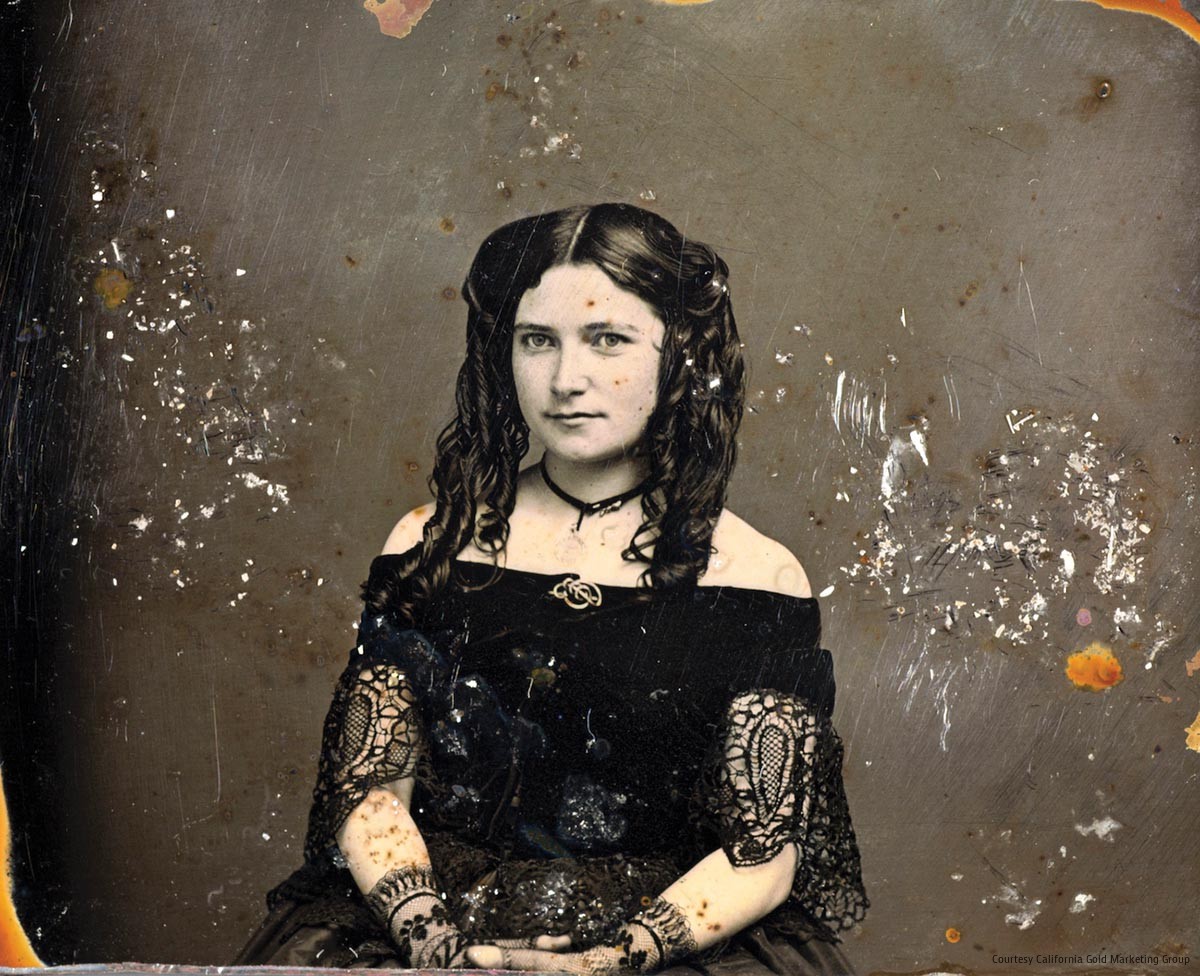
In the murky depths of the Atlantic Ocean, nearly a mile and a half beneath the surface, lies a relic frozen in time — a haunting daguerreotype portrait known as the “Mona Lisa of the Deep.” This captivating image of an unknown woman was discovered in 2014 in the wreckage of the SS Central America, resting 7,200 feet beneath the waves off the coast of South Carolina.

The SS Central America was a steamship that tragically sank in 1857 during a fierce hurricane. Known as the “Ship of Gold,” it was carrying tons of gold and countless passengers when disaster struck. The shipwreck was a historic loss, but the riches aboard made it a legendary treasure trove — estimates today value the recovered treasure at an astonishing $765 million in 2021 dollars.

Among the gold coins, nuggets, and artifacts recovered over the years, the daguerreotype stands out for its poignant human connection. Unlike the material wealth, this photograph captures the face of a woman from the mid-19th century — a fleeting glimpse into a life forever paused by tragedy. The image’s clarity and serene expression earned it the nickname “Mona Lisa of the Deep,” evoking the mystery and timeless allure of Leonardo da Vinci’s masterpiece.

Daguerreotypes, an early form of photography, were precious and rare in the 1850s, often treasured family heirlooms. The fact that this fragile image survived the decades underwater is nothing short of miraculous. It invites us to wonder: Who was this woman? What was her story? Was she a passenger, a loved one, or a symbol of hope amid the chaos?


The discovery of the daguerreotype alongside the ship’s treasure is a reminder that history is not just about gold and artifacts, but about the people whose lives were intertwined with these moments. The SS Central America and its precious cargo connect us to a dramatic chapter in American history — the California Gold Rush era, maritime adventure, and the ever-present human stories beneath the surface.

As underwater archaeology continues to uncover secrets from the deep, the “Mona Lisa of the Deep” remains a captivating symbol — a silent witness to the past, resting quietly in the depths, waiting to tell her story.


Read More

A nearly complete 1st century BCE carnyx (celtic war trumpet)


In 2004, archaeologists discovered a hoard of ritually destroyed weapons — a dozen swords, scabbards, spearheads, a shield, bronze helmets, an iron helmet shaped like a swan — a cauldron, animal remains and seven carnyces. Before then, the remains of only five examples of the Celtic man-sized wind musical instrument that was widely used as ceremonial and highly intimidating war trumpets in the two centuries before and after Christ were known to survive.One of the seven found at Tintignac, on the other hand, was almost entirely complete. The Tintignac Carnyx was broken into 40 pieces. When puzzled back together, it was found to be just an inch short of six feet long with a single missing section of the tube. The bell was a boar’s head with protruding tusks and large pointed ears. Once restored, the Tintignac Carnyx proved to be the first virtually complete carnyx ever found.


The Greek historian Polybius (206-126BC) was so impressed by the clamour of the Gallic army and the sound of the carnyx, he observed that, "there were countless trumpeters and horn blowers and since the whole army was shouting its war cries at the same time there was such a confused sound that the noise seemed to come not only from the trumpeters and the soldiers but also from the countryside which was joining in the echo".

Read More

The Cosquer underwater paleolithic cave


Palaeolithic decorated cave, located in France, that contains numerous cave drawings dating back as far as 27,000 years BP. The cave has more than 200 parietal figures and is also the only decorated cave whose entrance opens under the sea.The Cosquer Cave is located in the Calanque de Morgiou in Marseille, France, near Cap Morgiou. The entrance to the cave is located 37 m (121 ft) underwater, due to the Holocene sea level rise. The cave contains various prehistoric rock art engravings. It was discovered in 1985 by and named after diver Henri Cosquer, but its existence was not made public until 1991, when three divers became lost in the cave and died.

The cave can now be accessed by divers through a 175 m (574 ft) long tunnel; the entrance is located 37 m (121 ft) below sea level, which has risen since the cave was inhabited. During the glacial periods of the Pleistocene, the shore of the Mediterranean was several kilometers to the south and the sea level up to 100 m (330 ft) below the entrance of the cave.Cosquer Cave is home to 500 paintings and engravings which were made during two distinct periods of occupation, the first 27,000 years ago and the last 19,000 years ago. Half of them depict animals drawn in bold lines, such as bison, antelopes, ibex, seals, auks and numerous horses.

The walls also feature 200 geometric designs. Except for an engraving showing a half-man, half-seal creature, the only human depictions are red or black hand stencils, some just outlines, others coloured in. Thumbs always seem to be shown intact, whereas other fingers are often missing or truncated. A computer analysis suggests these drawings are mostly of female hands. There are over 150 animals painted or engraved, making Cosquer one of the most densely painted caves ever found. And the 11 different species depicted are more than at Lascaux and nearly as many as at Chauvet.


Read More

A 19th century Japanese Firemen’s coat decorated with a spider hovering over an abandoned Go board.


an early-nineteenth-century firefighter’s coat, called hikeshibanten, since it features a spooky spider. Made in the Edo period in Japan, these firefighter’s coats were reversible, and this design is actually on the interior of the jacket, only visible when the jacket has been turned inside out. A large spider—with an endearing face—looms over the shoulder of the jacket, where it hovers menacingly over an abandoned go board (Pacific Northwesterners may have unnerving flashbacks to the giant house spiders that descend on Seattle in the autumn). The range of tonalities centers on indigo, white, black, and greyish-brown, with red accents on the fan; this color palette visually unites the work, creating parallels between the spider’s eyes and the go pieces.

The method of dyeing used, tsutsugaki, is a type of resist dyeing. The design was drawn on the cotton using rice paste, and these initial lines are visible now as the lightest areas of the design. The spider and the go board were dyed their respective colors, and covered with more rice paste to block any other dye from entering the area. Then the fabric was dipped into indigo multiple times, dried, soaked in hot water again, and the rice paste was scraped off to reveal the layering of colors; this whole process could take 20 days.

The scene is from the story of the warrior-hero Minamoto no Yorimitsu (948–1021) who, once when sick, was visited by an evil priest in the guise of a giant spider. Yorimitsu saw through the disguise and attacked the spider priest, and his four attendants (who were playing a game of Go while guarding him) leapt up to track the intruder back to his den

Read More

Fall of the Rebel Angels, carved out of a single piece of marble in 1740 by Italian sculptor Agostino Fasolato, it depicts 60 fallen angels.


The astonishing piece, comprising more than sixty sculpted figures, evocatively embodies the eternal struggle between good, represented by the archangel Michael with his flaming sword, and the forces of evil spearheaded by Lucifer, who leads the rebel angels.

In 1765 Giovan Battista Rossetti, in his Description of the paintings, sculptures and architecture of Padua, lists it as one of the main attractions of Padua, describing it as “to say the least wonderful, not tempted or even from ancient Greece“. The remarkable technical mastery shown by the sculpture continued to amaze people throughout the 19th century, even beyond local borders. The theologian Antonio Rosmini describes it several times in his epistolary.


Read More

The shaman of Bad Dürrenberg


The shaman of Bad Dürrenberg are the remains of a 25-35 year old woman, who was burried 8600 to 9000 year ago in Germany. Around her, were the remains of an extraordinary head-dress, made from the bones and teeth of different animals such as deer, wild boar, crane and turtle

aIn the shade of the forest there is space for encounters of a special kind. The 25 to 30-year-old woman was buried bedded in raddle around 9,000 years ago. The lavish inventory of grave goods attests to a special social role of the deceased. The enormous diversity of animal species represented in the grave, of which not all would have been just food supplies for the afterlife, is remarkable. Ethnographic comparisons suggest that some objects are to be interpreted as requisites of shamanistic practices. The transition from mobile foraging to the sedentary way of life with agriculture and cattle breeding around 5600 BC marked the end of the Mesolithic. The age of the hunters – as the longest phase of human lifestyle – came to an end.

The grave of the Bad Dürrenberg shaman is the oldest burial in central Germany. An infant was buried with her. The analysis of the woman’s skeleton revealed that her uppermost cervical vertebra was malformed and that blood vessels in the lower skull area could have been spatially restricted. This malformation may have made her a special person. Anthropologists suspect that through extreme positions of her head she could have even deliberately induced herself to faint. The overabundant inventory of grave goods alone testifies to a special social role of the deceased. Certain grave goods also played an important role in interpreting this burial as a shaman’s grave.


Read More

The Sweet Track


The Sweet Track is a 5830-year-old Neolithic timber walkway, located in the Somerset Levels in England and discovered in 1970. It was originally part of a network of tracks built to provide a dry path across the marshy ground.

Built in 3807 BC (determined using dendrochronology) and is the second-oldest timber trackway discovered in the British Isles, dating to the Neolithic. It is now known that the Sweet Track was predominantly built along the course of an earlier structure, the Post Track.

Extensive tree ring studies have shown that ash, oak and lime trees were systematically cut, pre-fabricated and transported to the site, where they were built into a narrow footpath supported on crossed poles, driven into heavy poles underwater and pegged together. Finally the oak walking platform was laid on top of the V-shaped notch. All this indicates a high degree of organisation and forward planning.

Some repairs were carried out, but it is clear that the Sweet Track was only in use for around ten years, probably due to the rising water level engulfing it.


Read More

10 000 years old women footprints.


More than 10,000 years ago, a woman or young man made 2 trips separated by at least several hours, carrying a toddler in one direction. Their trackway, now New Mexico’s White Sands National Park, stretch for 1.5km and consists of more than 400 human prints.

Rain may have pelted the traveler’s face as their bare feet slid on the mud. They paused to briefly set the toddler on the ground before pressing on; a wooly mammoth and giant sloth ambled across their freshly laid tracks. Several hours later, the traveler followed the same route south, this time empty-handed.

The trackway consists of more than 400 human prints, including several tiny child prints, as described in a new study published in Quaternary Science Reviews. By analyzing the shape, structure, and spread of the tracks the research team unveiled an intimate portrait of one ancient person’s walk across the landscape, right down to their toes slipping on the slick surface.

White Sands National Park contains a treasure trove of fossilized human and animal footprints.

Tens of thousands of years ago, during the ice age, a giant body of water, Lake Otero, rested within the Tularosa basin. The climate was less arid, and the vegetation was abundant. One could have seen grasslands stretching for miles that would have looked more like the prairies of the Midwest rather than New Mexico’s deserts.

This paradise of lush green life naturally captured the attention of the larger animals of the ice age. Plant eaters such as ancient camels, Columbian mammoths and Harlan’s ground sloth came to Lake Otero to feast on the grasses and trees of the Tularosa Basin. This attracted fearsome predators known as the dire wolf and American Lion. These animals’ footprints remained long after their departure of the wetlands of Lake Otero and eventually became fossilized.

In 2018, researchers discovered what they believe to be footprints of a female. They tell a story that may seem familiar today; her footprints show her walking for almost a mile, with a toddler’s footprints occasionally showing up beside hers. Evidence suggests that she carried the child, shifting them from side to side and occasionally setting the child down as they walked. The footprints broadened and slipped in the mud as a result of the additional weight she was carrying.


Read More

Roman dog names


What did the ancient Romans name their four-legged best friends? Lucius Iunius Moderatus Columella gives us a few recommended names in the section of his work on agriculture dealing with the rearing and training of dogs. Other likely sources used by the ancient Romans for dog names may have come from literature, in much the same way that people today draw on literature for naming their dogs.

Here is a list of some of the names in both Greek and Latin as mentioned by some writers. Each name is followed by gender and meaning.


  • Agre. f. “Hunter”. One of Actaeon’s hounds in Ovid’s Metamorphoses. …keen-scented…
  • Argiodus. m. “White-tooth”. One of Actaeon’s hounds in Ovid’s Metamorphoses. …from a Cretan father and a Spartan mother…
  • Celer. m. “Speedy”. A recommended dog name in Columella’s On Agriculture.
  • Ferox. m. “Savage”. A recommended dog name in Columella’s On Agriculture.
  • Harpyia. f. “Seizer”. One of Actaeon’s hounds in Ovid’s Metamorphoses. …with her two pups…
  • Hylactor. m. “Barker”. One of Actaeon’s hounds in Ovid’s Metamorphoses. …shrill-tongued…
  • Hylaeus. m. “Sylvan”. One of Actaeon’s hounds in Ovid’s Metamorphoses. …savage…but lately ripped up by a boar…
  • Hyrcanus. m. “From Hyrcania” (a region in ancient northern Persia, possibly meaning “land of the wolves”). Mentioned by Pliny the Elder in his Natural History to illustrate the faithfulness of dogs. …upon the funeral pile of King Lysimachus being lighted, threw itself into the flames…
  • Ichnobates. m. “Trail-follower”. One of Actaeon’s hounds in Ovid’s Metamorphoses. …keen-scented…baying loud on the trail…a Cretan dog.
  • Labros. m. “Fury”. One of Actaeon’s hounds in Ovid’s Metamorphoses. …from a Cretan father and a Spartan mother…
  • Lacon or Lakon. m. “Spartan”. One of Actaeon’s hounds in Ovid’s Metamorphoses. …renowned for strength… Also, a recommended dog name in Columella’s On Agriculture.
  • Laelaps. m. “Hurricane”. A famous – and relentless – hunting hound in Ovid’s Metamorphoses, originally a gift of the gods.
  • Lycisce. f. “Wolf”. One of Actaeon’s hounds in Ovid’s Metamorphoses. …swift…Melampus. m. “Black-foot”. One of Actaeon’s hounds in Ovid’s Metamorphoses. …a Spartan.
  • Melanchaetes. m. “Black-hair”. One of Actaeon’s hounds in Ovid’s Metamorphoses.
  • Nebrophonos. m. “Fawn-killer”. One of Actaeon’s hounds in Ovid’s Metamorphoses. …staunch…
  • Oresitrophos. m. “Mountaineer”. One of Actaeon’s hounds in Ovid’s Metamorphoses.
  • Pamphagos or Pamphagus. m. “Voracious”. One of Actaeon’s hounds in Ovid’s Metamorphoses. …Arcadian…
  • Patricus. m. “Noble”. From an ancient epitaph to a dog, cited in Abbott’s work. …an Italian dog, at Salernum…“My eyes were wet with tears, our dear little dog…In thy qualities, sagacious thou wert like a human being.”
  • Poemenis. f. “Shepherd”. One of Actaeon’s hounds in Ovid’s Metamorphoses. …the trusty shepherd…
  • Pyrrhus. m. “Fire; Flame-colored”. A dog mentioned by Pliny the Elder in his Natural History to illustrate the faithfulness of dogs. …the dog of the tyrant Gelon…
  • Theridamas. m. “Beast-killer”. One of Actaeon’s hounds in Ovid’s Metamorphoses.
  • Theron. m. “Hunter”. One of Actaeon’s hounds in Ovid’s Metamorphoses. …fierce…
  • Tigris. m. or f. “Tiger; Tigress”. One of Actaeon’s hounds in Ovid’s Metamorphoses. Also, a recommended dog name in Columella’s On Agriculture.


Read More

The mystery of Ksar Draa


Far away, in the center of Algerian desert lonely structure stands through hundred of years. The story of this place might be lost forever. It looks like a fortified village, but we are not sure who built it and for what purpose. Not even locals know what in fact is this quiet huge building.

From very small resources we can only find that Jews from Timimoun region occupied the settlement in shart period of time. 

Not much was left from the settlement. Circular wall with 2m height, several rooms made of clay on three levels. What surprising there are no windows cells overlooking outside, no staircases. There were gueses that it might be famous caravanserais, remote building providing shelter during long trips in deserts. But Ksar Draa does not seem to be this kind of building, it is too much defensive. But on the other hand, it is also too small to become a castle of fort, we cannot find any artifacts that can prove it. In so dry climate there should be any artifacts left that can shed a light on it, but Ksar Draa is empty. 


So what is this? Someone's abandonned home? Ancient hideout? We cannot tell, and what's worst - we might not ever know.


Read More

The mighty Vasa galleon


 In 1626 king Gustavus Adolphus of Sweden decided to built "Vasa", a warship that Baltic sea have never seen before. He was very focused on his naval forces, believing that war success depends on the strength of his ships. After more than two years of construction, Henrik Hybertsson reported that the ship is ready.

Gustavus was all the time involved in construction, asking for many changes and improvements. He knew that Vasa will be crucial in war with Poland. War that will decide who rules Baltic Sea. Henrik Hyberston, main constructor decided that the ship will be 61 meters long and 12 meters wide. Vasa had 1210 tons buoyancy, 1275 sq meters of sail and 64 main cannons. Yet before first sail Vasa became the pride of Stockholm. The ship was also a target for spies. 

10th August 1628 almost everyone in Stockholm went to the docks to sea first sail of the mighty Vasa. The weather was perfect, 100 sailors with their families were ready to sail. In the harbor everything seems fined. Vasa was slowly leaving Stockholm. But just after passing rock breakwater, Vasa's construction defects became clear. The ship was too narrow and too high. Galleon had troubles not only wind mild wind but also with low waves. 120 tones of ballast could not balance weight of cannons.  

Just after 1300 meters a strong blow of wind overturn board. Salty water immediately bursted into cannon holes. In mater of minutes Vasa was under the water taking lives of 30-50 men. 

12 hours after sinking its captain, Hansson, was arrested and interrogated. But very quickly after it became obvious that no one on the board was responsible for this loss. Few weeks before first sail shipwrights had a stability test that proved that Vasa is dangerous and can easily overturn. Its constructor, Hybertsson died year before sinking. Swedish king was not present that day in Stockholm. He was informed two weeks later, in Prussia. He became furious and wanted to punish anyone involved in sinking. But official investigation did not found who was responsible for this tragedy. 


Just hours after sinking first engineers wanted to haul out Vasa. But it became clear that this operation is too complicated and risky. For 300 years Vasa was resting 30 meters under the water. 

Baltic Sea can be dangerous, but it can also greatly preserve wood. Low temperatures, less salty and without naval shipworms can conservate ships for hundreds of years. In 1956 scientists finally found the ship. 

It started national collection to haul it from the bottom. After months of analysis Sweden decided that the will try to bring it back to air by special dinghies, pumps and pipes. In 1961 Vasa came back. 


After years of restoration it finally stands in Stockholm and it's the largest 17th century warship that we can see today.


Read More

1000 years ago some Viking lost in the lake his chest...


In 1936 Hugo Kraft was ploughing his field when found a strange encircled by an iron chain chest. It contained the largest collection of tools of this date so far found: iron working and carpenter's tools, raw materials, un-finished products. His field was located on a drained lake. 

During the Viking Age, the area where Mästermyr mire is located used to be a lake. The mire was drained in 1902–10. Most of the find had been placed in the chest, but there were also objects around it such as three bronze cauldrons, three bells and a fire-grid of iron. A chain, made up of 26 figure-of-eight shaped links, was wrapped around it. It served both as an extra lock and handle since the chest was too heavy for the original handle. The chest and the other items had probably been placed in a boat which capsized and sank in the lake. Another theory is that the chest was temporarily hidden at the water's edge.

The chest contained Viking-era blacksmithing and woodworking tools. It also contained several products of such work, including elements of several locks. The chest and its contents provide a valuable insight into technology during the Viking Age.

The chest, 90 cm (35 in) long, 26 cm (10 in) wide and 24 cm (9.4 in) high, was made of oak with iron hinges and lock. It was intact despite the rough encounter with the plow. It was rectangular with a slightly curved lid and flat bottom. The bottom was joined to the ends via a mortise and through tenon. Pegs were used to attach the sides to the bottom and end pieces. The ends and sides were trapezoidal and slightly angled. A lock wrought from iron was attached to the front side of the chest.


The chest contained over 200 tools and blacksmith works or works in progress, making it the largest Viking tool find in Europe. The tools resemble early Roman tools, now on display in museums in Germany, among those the Saalburg. Technological influences spread throughout Europe with the expansion of the Roman empire. The ensuing trade carried ideas and craftsmanship further to regions far from Rome.

The contents of the chest indicate that it belonged to a travelling craftsman who made repairs and produced new items. The tools show that he was a smith and a carpenter, and had some knowledge of locks, coppersmithing and coopering. Among the items were three padlocks of a design inspired by Roman locks and of the same kind that were found at excavations in Birka.

Some of the tools and objects in the chest:

Three padlocks
Two keys
Springs, plates and other parts of locks
Three sledgehammers
Three hammers
One ball-peen hammer
One pair of large forging tongs
One pair of snips
Four smaller anvils
Tools for making nails
Three stamping pads
Some smaller axes
One large broadaxe
One wide adze
One hand saw
Six spoon-augers
One saw blade
One chisel
One gouge
Four files
Two knives
Two bradawls
One spatula
Two sharpening stones
One steelyard balance
Four clamps
One hacksaw
Two rasps
One pair of tongs
One chisel
One stone chisel
One ash-rake
One punch
Two tripods
Two drawknives
Miscellaneous metal fittings


So in fact 1000 year ago a skilled and wealthy Viking lost his belongings during the sail on the Mastermyr Lake. Imagine how angry he was. Or maybe he also lost his life?


Read More

Amazing staircase of Chantilly Castle


Located 40 kilometres north of Paris, in the Picardy region of France, this small town looks like it belongs to a fairytale. The Jewel in the crown of Domaine de Chantilly is the stunning 16th century Chateau, built for Anne de Montmorecy, and is undoubtedly one of the most astonishing French chateau venues near Paris. 

 It comprises two attached buildings; the Grand Château, destroyed during the French Revolution and rebuilt in the 1870s, and the Petit Château which was built around 1560 for Anne, Duc de Montmorency. It is now owned by the Institut de France, and is open to the public. The first mansion (no longer extant, now replaced by the Grand Château) was built in 1528-1531 for the Constable Anne de Montmorency by Pierre Chambiges. The Petit Château was also built for him, around 1560, and probably by Jean Bullant. The original mansion was destroyed in the French Revolution. It was repaired in a modest way by the last Condé, but then entirely rebuilt in 1875-1881 by Henri d'Orléans, duc d'Aumale (1822-1897) to the designs of Honore Daumet. The château’s art gallery, the Musée Condé, houses one of the finest collections of historical paintings in France (after the Louvre), with special strength in French paintings and book illuminations of the 15th and 16th centuries. The library of the Petit Château contains over 700 manuscripts and 12,000 volumes, including a Gutenberg Bible, Les très riches heures du Duc de Berry and Jean Fouquet’s Book of Hours of Etienne Chevalier.

Honoré Daumet was responsible for this jaw-dropping work of art that functions as the newel Post, balustrade and railing of this magnificent space. Wrought iron, copper, brass and bronze were morphed into an explosion of detail...the head of a ram, fleur di lis, the head of Medusa, the royal crown, initials of the Duke of Aumale, swords, floral embellishments as well as ribbons.


Read More

Amazing historical artifacts #1


Coin (silver) from Syracuse, Greece around 466 BCE


A pair of intricately cut shoes that were found on a bog body from over 2,300 years ago


Helmet made by Milanese armorer Filippo Negroli; 1543


Corsican vendetta knife with floral detail. The blade reads: “Che la mia ferita sia mortale" - or roughly: “may all your wounds be mortal”. 19th century


Ancient sense of humor: Greek lead sling bullet, inscribed with DEXAI, (meaning in greek "Catch!“) 1600 years old


Roman gold helmet, 4th century AD


Viking burial stone ships, Lindholm Høje, Denmark. 1000-1200 AD


Chantilly Castle, wrought iron railing made in 1870 by the Moreau brothers on drawing of architect Honoré Daumet.


Illustration of a lion, leopard, rabbit, and elephant from memory/description, taken from Tractatus de Herbis (Italy ca. 1440)


Unfinished obelisk in Aswan, Egypt. 1500 BC


Hoof prints found at the Amphitheatre of Serdica, Bulgaria, dating to the about the 3rd–4th centuries AD.

Read More

Chinese gold sword


In Ancient China, gold and silver were not the prestigious materials they were in the West. Jade and bronze were more highly prized. Gold was used for decorative purposes, as inlay or coating on bronze or lacquer, and only very rarely for vessels or other independent objects.

However, in the Eastern Zhou period(771-221 BC) gold began to be increasingly used on a larger scale, though goldworking still relied to a great extent on well-established bronze technology, with ornaments and other items cast using moulds instead of beaten into shape. 

This sword's handle has a conspicuous line on its sides, showing that it was probably cast in a two-piece mould. The hilt is hollowed out and both sides are decorated with a design known as 'dragon interlace'

The gold hilt is fragile, which probably made it impractical for use on a battle sword. It may have been made for display or for placing in a tomb for taking to the afterlife.


Read More
Powered by Blogger.

Popular Posts