Filippo Negroli - master of armors

When Holy Roman Emperor Charles V wanted to look faboulous and dangerous at once, he always asked Filippo Negroli, milenasian master of armors. 

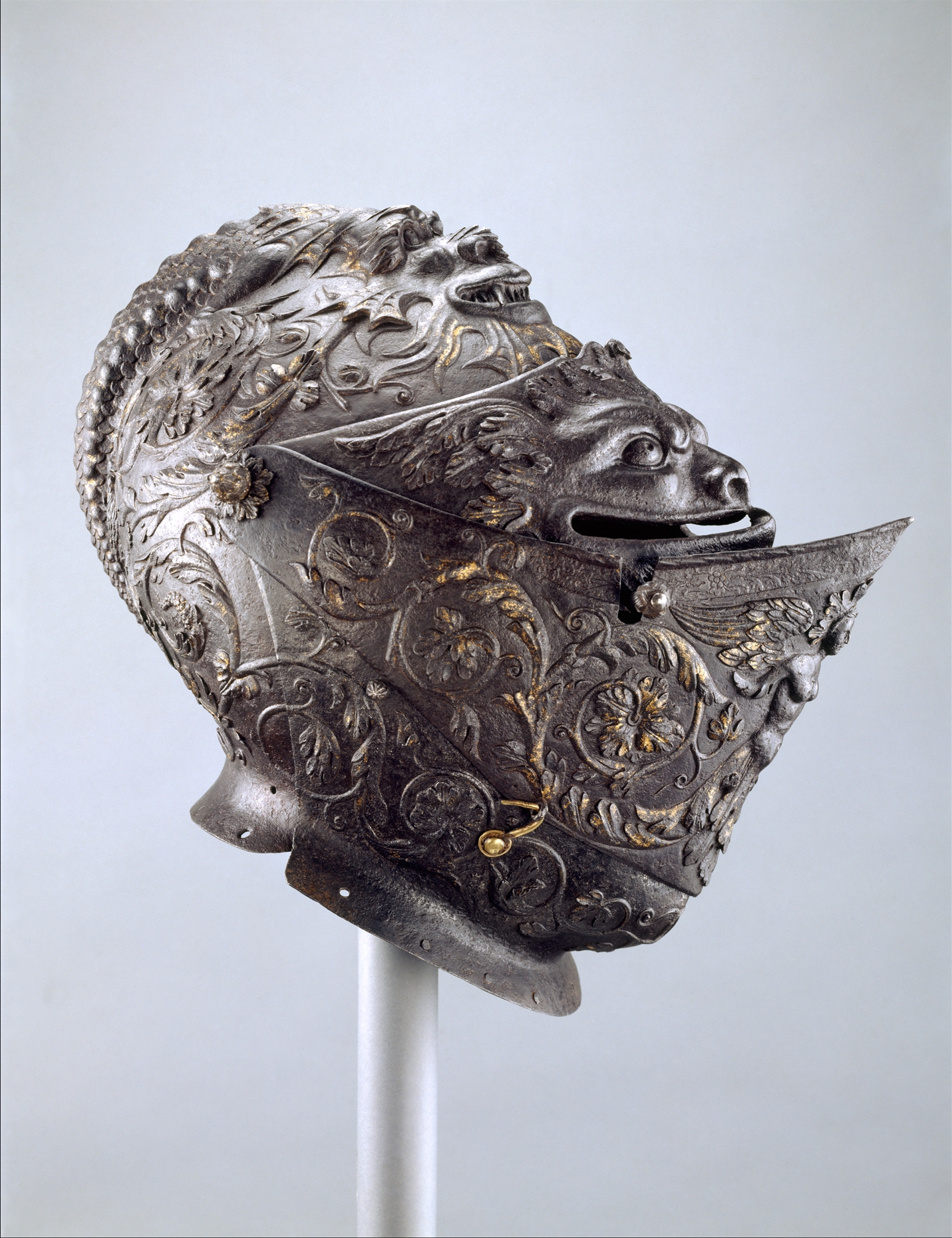
Filippo lived in 16th century and he was known as best and most skilled armorer in history. With the help of his brothers and cousins at their Milanese family workshop, Negroli outfitted the bigwigs of the Holy Roman Empire and the French and Spanish royal courts in incredible style. His elaborately embellished gauntlets, breastplates, shields, and helmets incorporated mythological figures like griffins, mermaids, and Medusa, as well as designs based on the art of ancient Rome. In addition to protecting internal organs from a forcefully aimed rapier or halberd, these pieces of armor played a symbolic role, transforming their wearers into the guise of the heroes of ancient history, mythology, or literature. The helmets were intended for Renaissance princes who were often educated in the classics. These highly self-assured individuals “saw themselves as successors to the great statesmen and generals of ancient Rome. Among the most impressive creations Negroli’s armory sent forth were the burgonets: military helmets characterized by a prominent peak and a comb or crest that runs all the way from the forehead to the base of the neck. The artisans at the Negroli armory were fans of depicting figures reclining across the combs of helmets. 
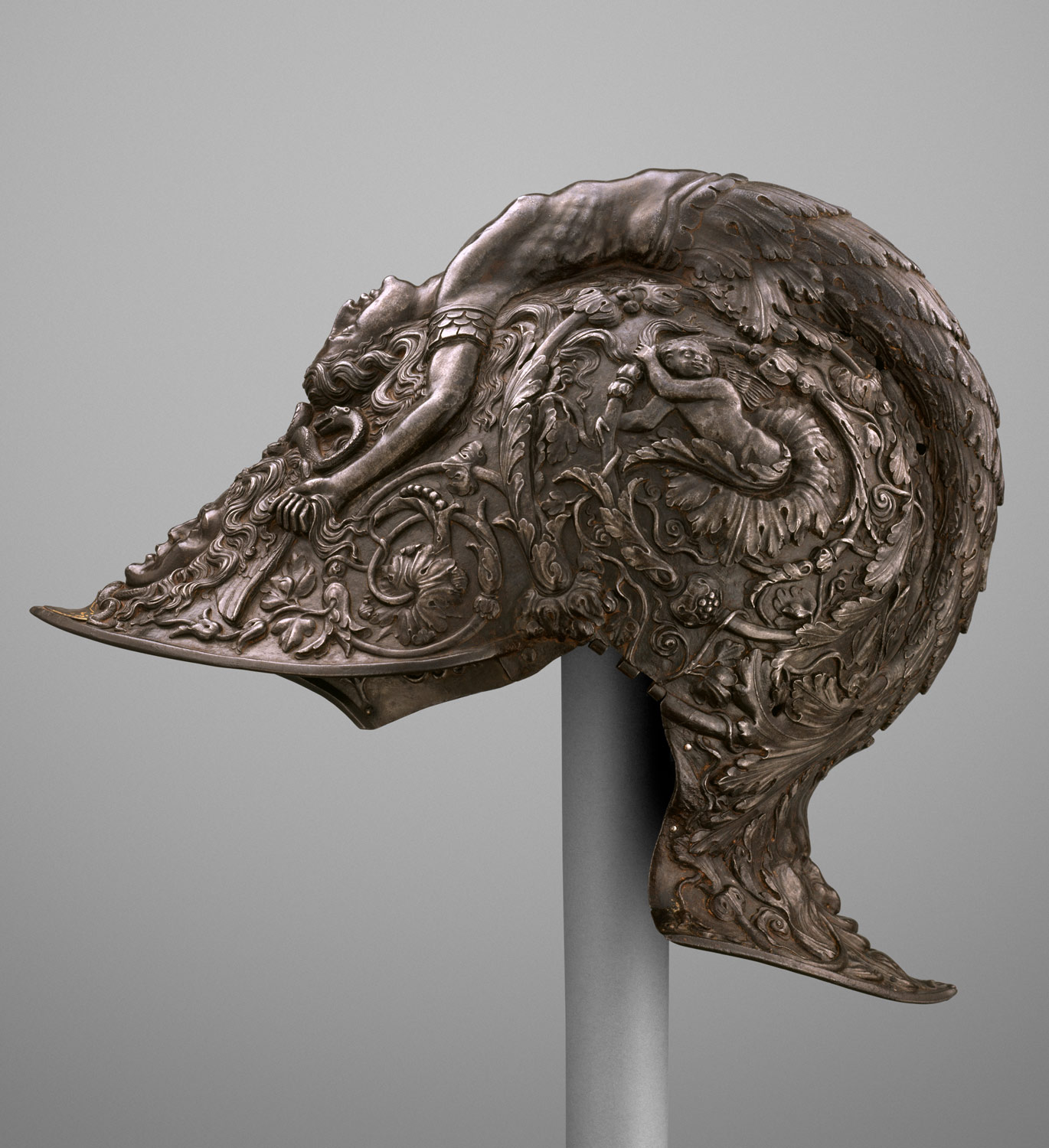
Negroli’s satisfied customers included Holy Roman Emperor Charles V, and French rulers Francis I and Henry II. Charles V was a frequent client, and didn’t always go in for all the mythology stuff—in some cases, the man was the myth. Negroli made a parade helmet for the emperor that incorporated Charles V’s own golden hair and beard into the design, resulting in him putting on armor that made him look like a steel version of himself. Filippo was specialized in repoussé of armour, whereas his brother Francesco was renowned for his damascening skills. Filippo's pieces are considered especially remarkable because they were wrought in steel, rather than the more-easily worked iron that was the traditionally assumed medium.




Read More

Kraków secrets

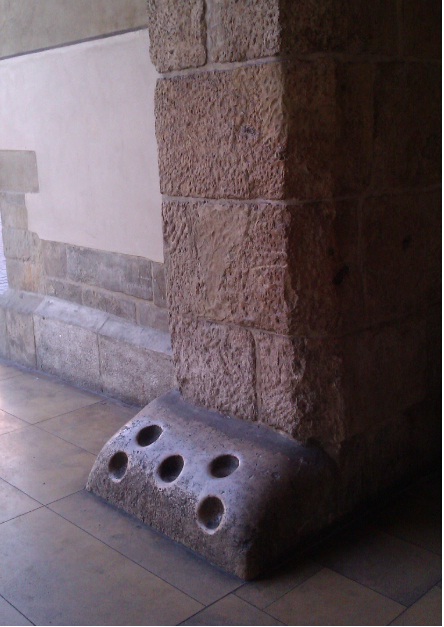
Before 19th century and gas lamps all of the cities were very dark during nights. Only the torches were sources of light. However torches - were not comfortable to use. They quckly went off, were dangerous in wooden architecture and were able to painfully burn the user.

So to avoid the problems, most all of the buidling had special stone holes where a person with torch could have input the torch and put out the flames. While walking in Kraków you can still find few examples of those old fashion extinguishers. One of them, from 15th century can be found on each corner of Cloth Hall (Sukiennice).


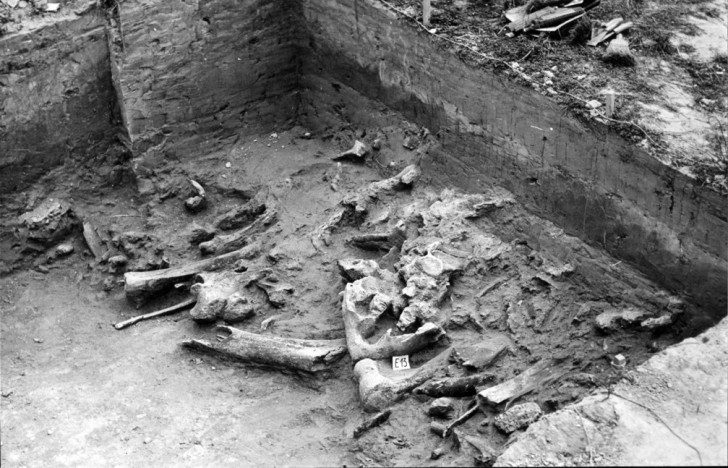
As speaking of Kraków - did you know that this beautiful city sleeps on one enormours mammoth grave? In 1967 one of the newly residents started to build his house few meters from mound Kościuszki. Suprisingly he have found few giant bones. Quickly after official excavation begun. First excavations showed bones of 89 mammoths which died aproximetly 24 000 years ago. Archeologist have found also early humans hunting tools. Many of the bones shows cuts made of stone knives.

Soil in Kraków is the biggest source of mammoths bones in the world! However only few percent of terrain was examined and it is believed that the mound itself is unbelievely big grave of those prehistoric animals.

Whats interesting bones of mammoths were found in Kraków in middle ages. Due to lack of knowledge it was believed that they were dragons parts of skeleton. One of the most interesting artifacts from that times hungs in the front of Wawel Castle. Three mysterious bones were hunged on iron chain in late middle ages.

It took four ages to confirm that they are not dragon bones but prehistoric whale tusk, woolly rhino skull fragment and part of mammoth leg. They were found in Vistula (Wisła) river in aproximetly 14-15th century and hunged as a proof of Wawel Dragon.


Kraków is also famous by one more world-class prehistoric artifact. Here, you can find the only in the world perfectly preserved body of wolly rhino. It is complete, with skin, internal organs and soft tissue. The discovery was made in 1929 in a village in contemporary Ukraine, about 100 km to the southeast of Lvov. The specimen is a young female that died about 30 thousand years ago.


Cracow is one of the most beutiful cities in the world, so remember that those three stories are only small part of mysteries that you may found in gem of Poland. If you would like to visit the city, please follow the link to help find best hotels.
Read More

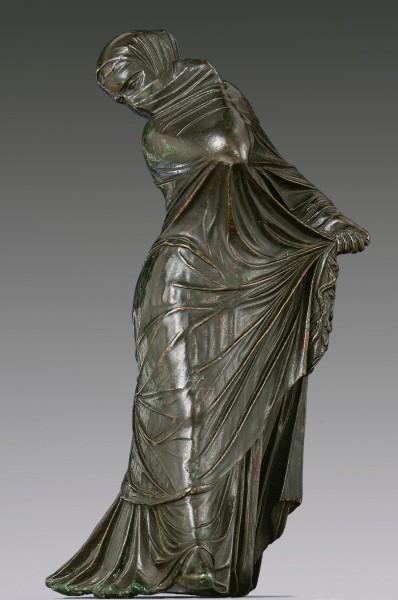
Bronze statuette of a veiled and masked dancer.


The complex motion of this dancer is conveyed exclusively through the interaction of the body with several layers of dress.
Over an undergarment that falls in deep folds and trails heavily, the figure wears a lightweight mantle, drawn tautly over her head and body by the pressure applied to it by her right arm, left hand, and right leg. Its substance is conveyed by the alternation of the tubular folds pushing through from below and the freely curling softness of the fringe.The woman’s face is covered by the sheerest of veils, discernible at its edge below her hairline and at the cutouts for the eyes. Her extended right foot shows a laced slipper. This dancer has been convincingly identified as one of the professional entertainers, a combination of mime and dancer, for which the cosmopolitan city of Alexandria was famous in antiquity. 

Read More

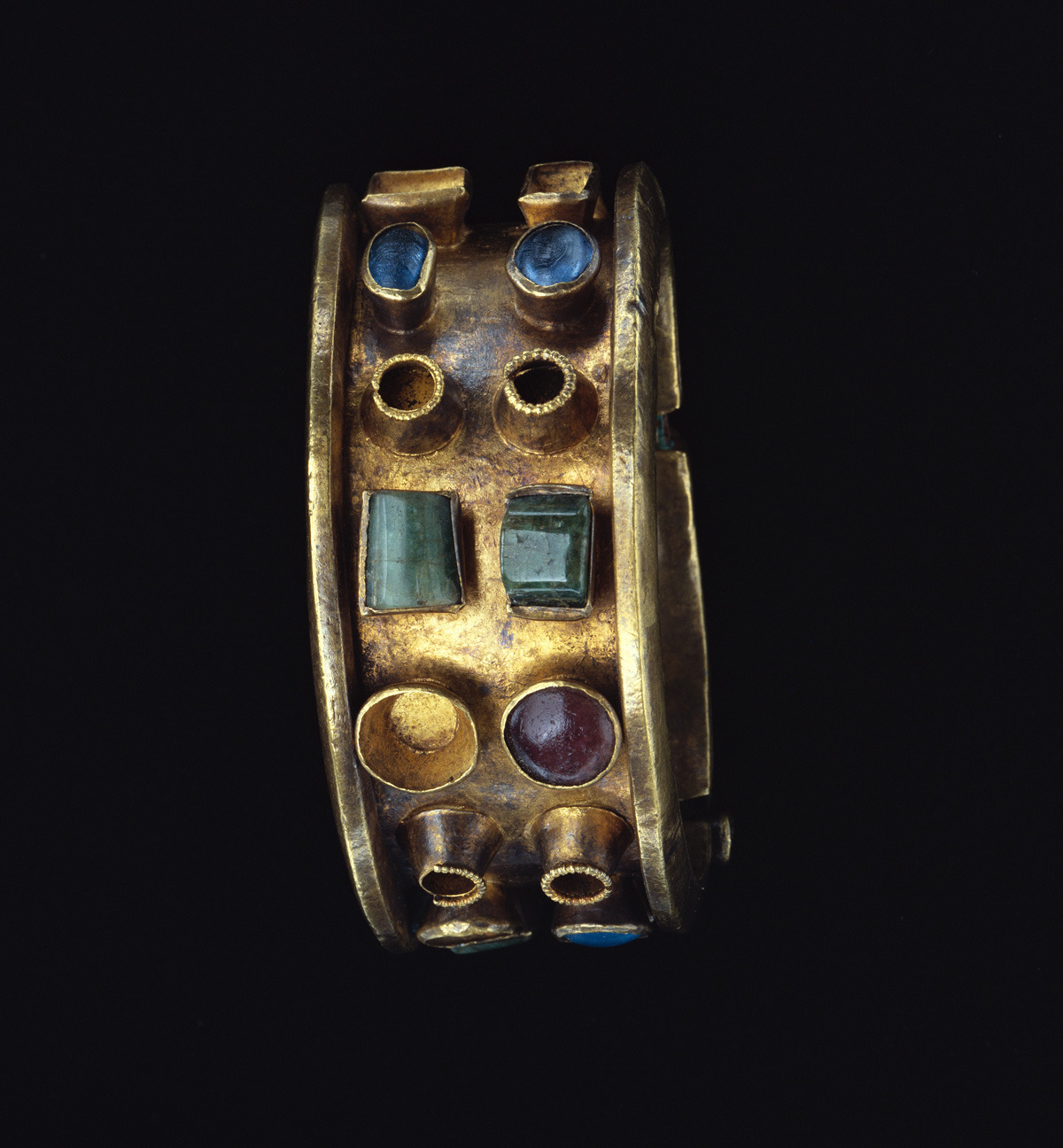
Roman bracelet, made of gold, glass, and emerald.


A heavy gold band elaborated by colored stones and glass forms this massive gold bracelet. The bracelet was made in two pieces, which were then hinged and secured with a pin decorated with green glass. The edges of the gold band are folded outwards at a perpendicular angle, forming a ledge that served to protect the stones. Blue, green, and red glass; emeralds; and now-missing pearls were placed in pairs in simple gold settings around the bracelet. The contrasting colors anticipated the Early Byzantine interest in polychromy. The bracelet was unusually heavy and probably was not very comfortable to wear.
The shape of the bracelet is Roman, yet there is something distinctly non-Roman about it. It resembles jewelry made on the edges of the Roman Empire, which merged Roman and native tastes.

Read More

The Persian ‘Immortals’

The Persian ‘Immortals’

Upon hearing about the great centerpiece of the ancient Persian army, The Immortals, many today would probably think of the slightly creepy Darth Vader/ ninja crosses shown in the movie 300, facing off against the Spartans. While certainly effective in creating dramatic cinema, this is not at all reflective of the real Immortals who served under the great Persian kings.
The Immortals were an elite force of 10,000 soldiers who fought for the Achaemenid Empire. According to Greek historian Herodotus, their name refers to the fact that their number never went below 10,000: a wounded or dead solider was immediately replaced in the ranks, ensuring that the force was always at its full strength. Originally this force was restricted to Persians, but latter Elamites and Medes were able to join.
Their name ‘The Immortals’ is given to us by Herodotus, however, the lack of references by non-Greek sources to these famous infantry guardsmen by this name raises some questions. Although they will probably always be known to the world as The Immortals, it is thought that Herodotus’ informant confused the Old Persian word anushiya (’attendants’) for the Old Persian anausha (immortals). This would certainly make more sense given the context: Neo-Babylondians and Assyrians also referred to their royal guards as ‘attendants’.
Despite this apparent slip-up, Herodotus, writing during the 5th century BC, does offer some valuable information about how these warriors were dressed in battle:
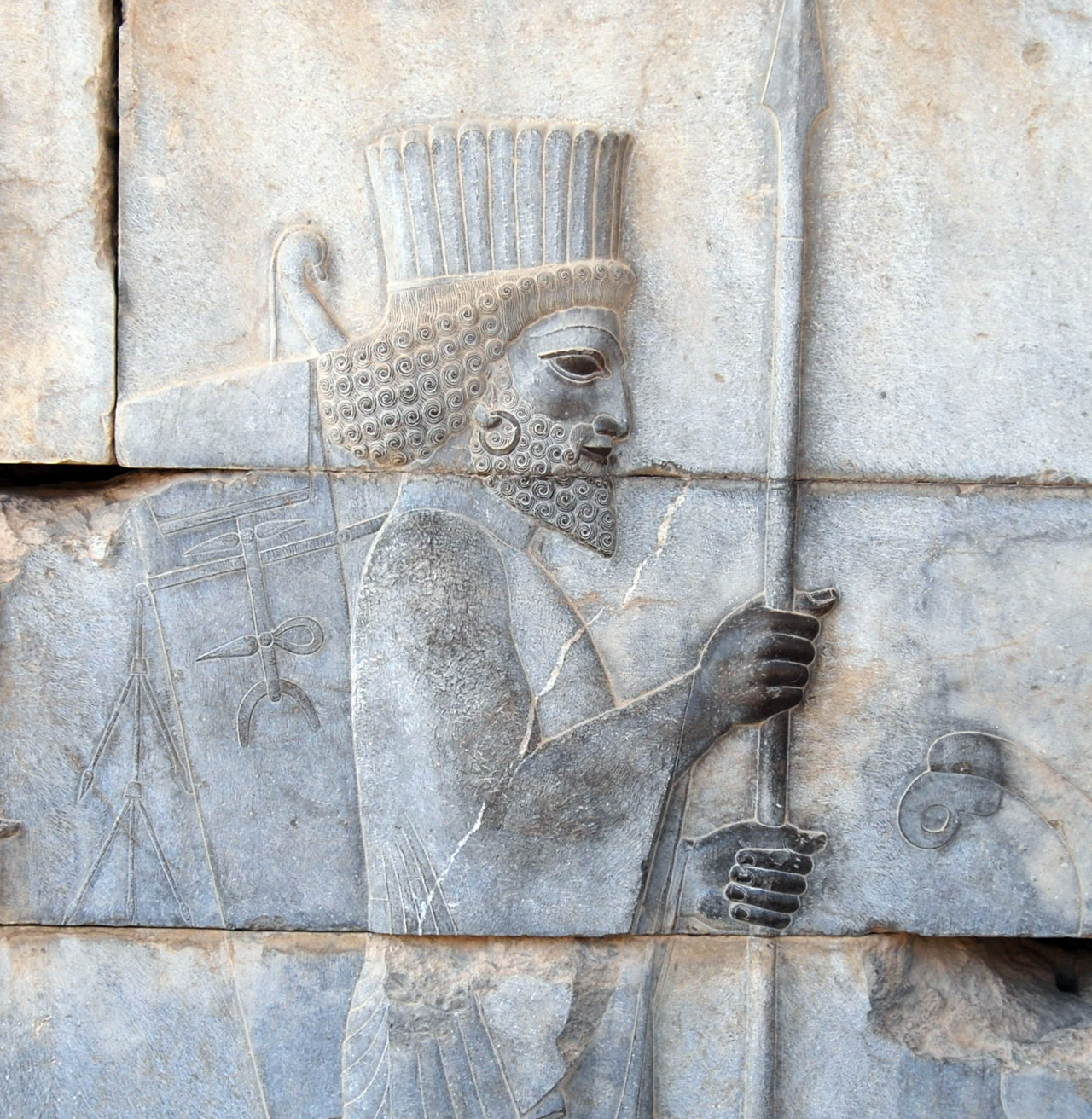
“They wore on their heads loose caps called tiaras, and on their bodies embroidered sleeved tunics, with scales of iron like the scales of fish in appearance, and trousers on their legs; for shields they had wicker bucklers, with quivers hanging beneath them; they carried short spears, long bows, and reed arrows, and daggers that hung from the girdle by the right thigh.”
Heavy, protective armor, such as metal helmets or breastplates, was rarely used by the Persians in general, enabling them to be quick and mobile on the battlefield. See also this Greek vase depicting a Persian warrior fighting a heavily armed Greek hoplite.
According to Herodotus, The Immortals were also richly adorned, and offered special privileges: “Their equipment was such as I have said; beyond this they stood out by the abundance of gold that they had. They also brought carriages bearing concubines and many well-equipped servants; camels and beasts of burden carried food for them, apart from the rest of the army.”

Photo: solder depicted at the 6th-5th century BC Persian site of Persepolis, which might represent one of the ‘Immortals’
Read More

A Corinthian helmet found in southwest Russia

A Corinthian helmet was discovered in a 5th century BC grave in the Taman Peninsula, southwest Russia, according to RIA Novosti news agency.Made of bronze, Corinthian helmets covered the entire head and neck, with slits for the eyes and mouth, protruding cheek covers (paragnathides in Greek) as well as a curved protrusion in the back to protect the nape of the neck.The helmet has a padded interior made of fabric or leather to protect the warrior’s skull. These helmets were indispensable for the Greek hoplites, the famous foot soldiers of the phalanxes, as they were highly protective because they completely covered the headOften their crest was surmounted by a crest (lophos) with a horsehair plume. The one found is corroded and highly fragmented, but its discovery is extremely significant for historical purposes. The Corinthian helmet is the only one of its kind discovered north of the Black Sea.
Read More

Origins of football

One of the oldest known soccer ball, found in the rafters of a bedroom in Stirling Castle and dating from around the time Mary Queen
Incoming World Cup in Russia will (like all previous) be a world-wide event with billions of people watching final match. Clearly, football is a global phenomenon and is likely only to get bigger and bigger as the internet and social media make it easier for people on different sides of the world to watch matches.

So who invented football? The common view is that football was invented in England, coming to the fore in the 19th Century.

However, there are claims that it was the Scottish who invented football as we know it, as well as the Chinese also believing they played an integral role in the birth of the game. Some have claimed that football dates back to as far as 2500 B.C. with the Greeks, Egyptians, Chinese and the Romans all having played a game involving a ball and feet. Of these ancient games, the most relevant to football in its modern incarnation is a Chinese game called Tsu-Chu which means "kicking the ball", with records dating back to the Han Dynasty, 206 B.C. - 220 A.D. The game involved kicking a small leather ball into a net strung between two bamboo poles. Using your hand was permitted but the foot and other parts of the body were allowed. There was one crucial difference: in Tsu-Chu the goal hung about 30 feet from the goal. The Japanese, Native Americans and Indigenous Australians all played games that centred on the feet, too.


Left: An episkyros player on an ancient stone carving at the National Archaeological Museum, Athens

What is not in doubt is England's huge influence on the spread of football, and indeed, many other popular sports such as tennis and cricket. Around the 9th Century is when people in England began to kick around a pig's bladder in villages. Authorities saw it as a nuisance and in 1314 there was a decree issued, banning the game due to its "great noise in the city". In fact, Henry VIII ordered the construction of his own pair of football boots and was perhaps England's first football lad with his heavy drinking and womanising. At this point in time football was violent and disorganised and a long way from the balletic game we watch today. olk football began in England in the 18th and 19th Century and even spread to other countries such as France. It was played by huge numbers of people and the goals were as much as three miles apart. The object of the game was to drive a ball, usually a pig's bladder, to a goal, and could be kicked, thrown or carried. Unsurprisingly, the game was extremely violent and kicking an opposing player in the shins was a legitimate tactic - no matter how far from the ball they were. However, as Britain became increasingly industrialized and capitalist folk football became less popular, as people moved into urban areas.

It was in the public schools of England that football began to modernise. Hands were still allowed but goalkeepers and tactics were introduced and high tackles were outlawed. Space restraints were devised, too. Football clubs emerged in the 19th Century but the some incarnations of the game still resembled rugby more than modern football. Schools began to play against each other but violent "shinning" was only frowned upon when the player was being held. The Football Association (FA) was formed on 26 October 1863. They wanted to bring together the different codes and systems used across the country and handling the ball, shin-kicking and tripping were all outlawed. More clubs joined the FA until the number reached 128 by 1887. in 1872 the first FA Cup game was played and by the 1870s players were getting paid by their clubs. The English Football League was formed in 1888 by then Villa director William McGregor.

The International Federation of Association Football (FIFA) was formed in Paris in 1904 with seven members. In 1930 the first ever FIFA World Cup was held in Uruguay. The rest, as they say, was history.


Read More
Powered by Blogger.

Popular Posts