Showing posts with label animals. Show all posts

An Egyptian floor mosaic depicting a dog and a knocked-over gold vessel. c. 200-100 BC


A floor mosaic using tesserae made of minute stone cubes, ranging from one to four millimetres in the opus vermiculatum technique.

The central medallion or emblem carries the picture of a dog, the first time ever such a motif is found on a floor mosaic in Alexandria. The dog is resting on his hind legs close to an upturned Greek vessel. The naturalistic image expresses strength and vitality, which points to the fine ability of the artist in using this medium to achieve clarity of design and definition. The fell of the dog, its spots and red collar are executed very precisely. The main colours in this medallion include black, white and yellow, yet the artist was able to convey light and shade in a brilliant manner. The angle of the dog's portrait is at three quarters, and the front part reflects light, while the rest of the body is in the shade. The gradation of shading on the upturned bronze pot shows light reflected on the central part, while the sides are gradually darker. The artist has indeed been able to express great depth in a 'hard' medium and this mosaic is a testament to the sophistication of mosaic workshops and artistry in ancient Alexandria.

Perhaps the theme on this floor is a scene of a theatrical story or from a literary work of art of Alexandria during the first three centuries B.C. However, the mosaic does not provide us with a clear idea as to the place where it was housed, but we can deduct that its shape was circular and about three metres in diameter, with this medallion as its centrepiece.

he Greeks used mosaics to decorate their floors in public places and private dwellings by using tesserae in many ways. Tesserae are the small pieces of stone, limestone, marble, glass or clay, which are cut in a small cubic form, hence their name. The Greek floor coverings became a complete tableau depicting plants, animals, geometrical designs and Greek/ Hellenistic motifs.

The Romans adopted also this art to cover their floors in homes and temples, as well as in their tombs. The Romans applied the same techniques of the Greeks. They also introduced new innovations in the manufacturing process.

The most ancient piece of mosaic was discovered in the East, in Ancient Iraq. It is from the Uruk civilization which dates back to 4000 years BC. Mosaic art disappeared after that time and reappeared again at the beginning of the 5th Century BC.
Read More

War elephants


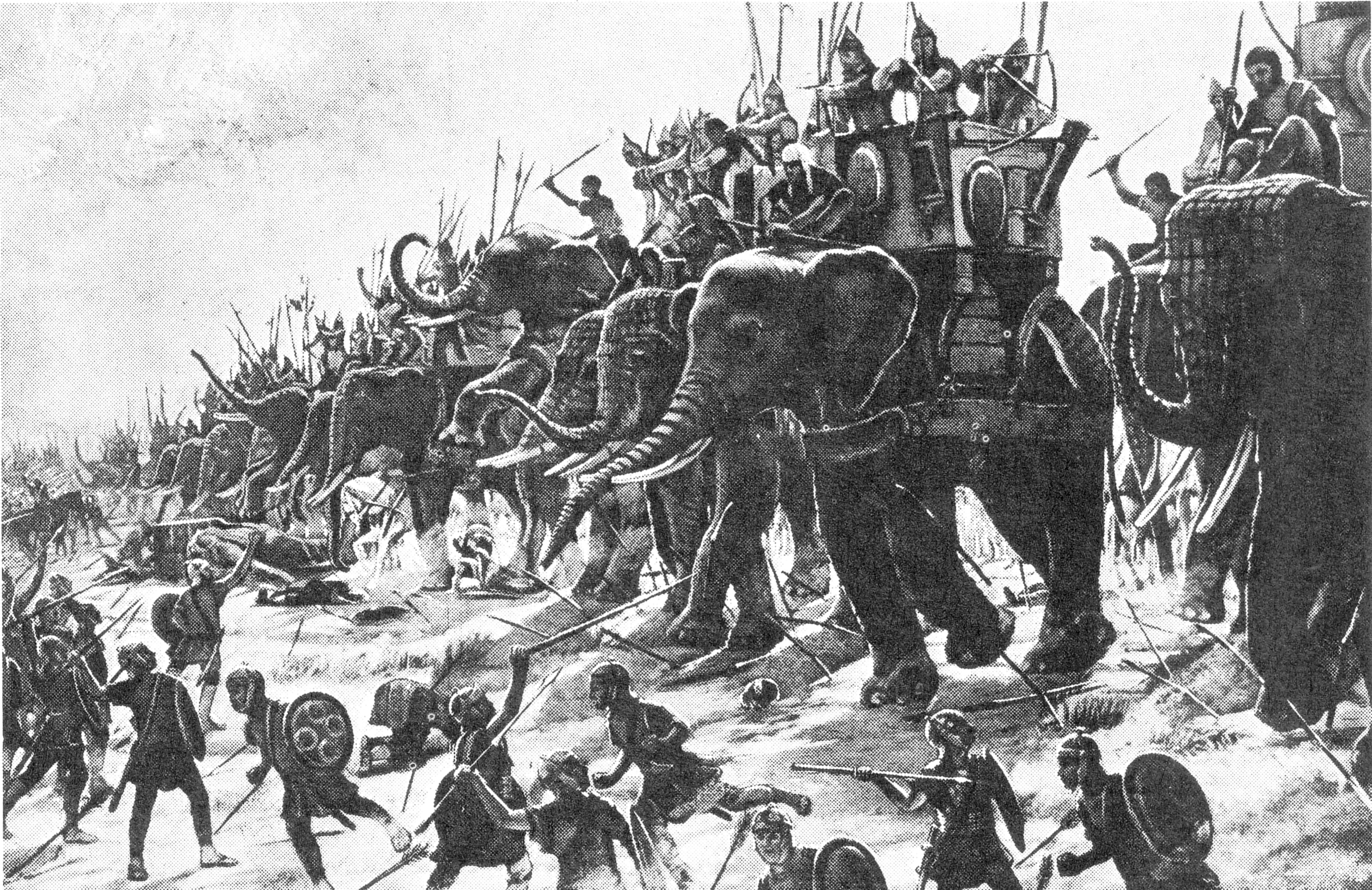
It was the arrival of the cannon in the 16th century that finally heralded the end of elephants being used as an instrument of war. Until that time, from as early as 1000BC, they trampled across battlefields around the globe, through wars in places as far flung as Yemen and Sri Lanka. 


The use of elephants in battle spread from India to Persia, and the first encounter between European forces and pachyderms took place in what is now Northern Iraq, with Alexander the Great winning a decisive victory against Darius III of Persia.
Evidently, the fifteen elephants deployed by the Persian forces were not enough to secure victory – Alexander left the battlefield having conquered Babylon and most of Persia.


The impact of the giant beasts of war did not go unnoticed by the legendary Macedonian king, who took them into his own army. The terror that the unfamiliar smell and sight of the elephants had on the cavalry proved to be a useful tool for Alexander in further battles, and he went on to control as many as 100 war elephants.

War elephants were introduced to the Mediterranean by King Pyrrhus of Epirus. He brought twenty to attack the Romans at the battle of Heraclea in 280BC and won decisively because the Roman’s were unprepared for the war elephants. 

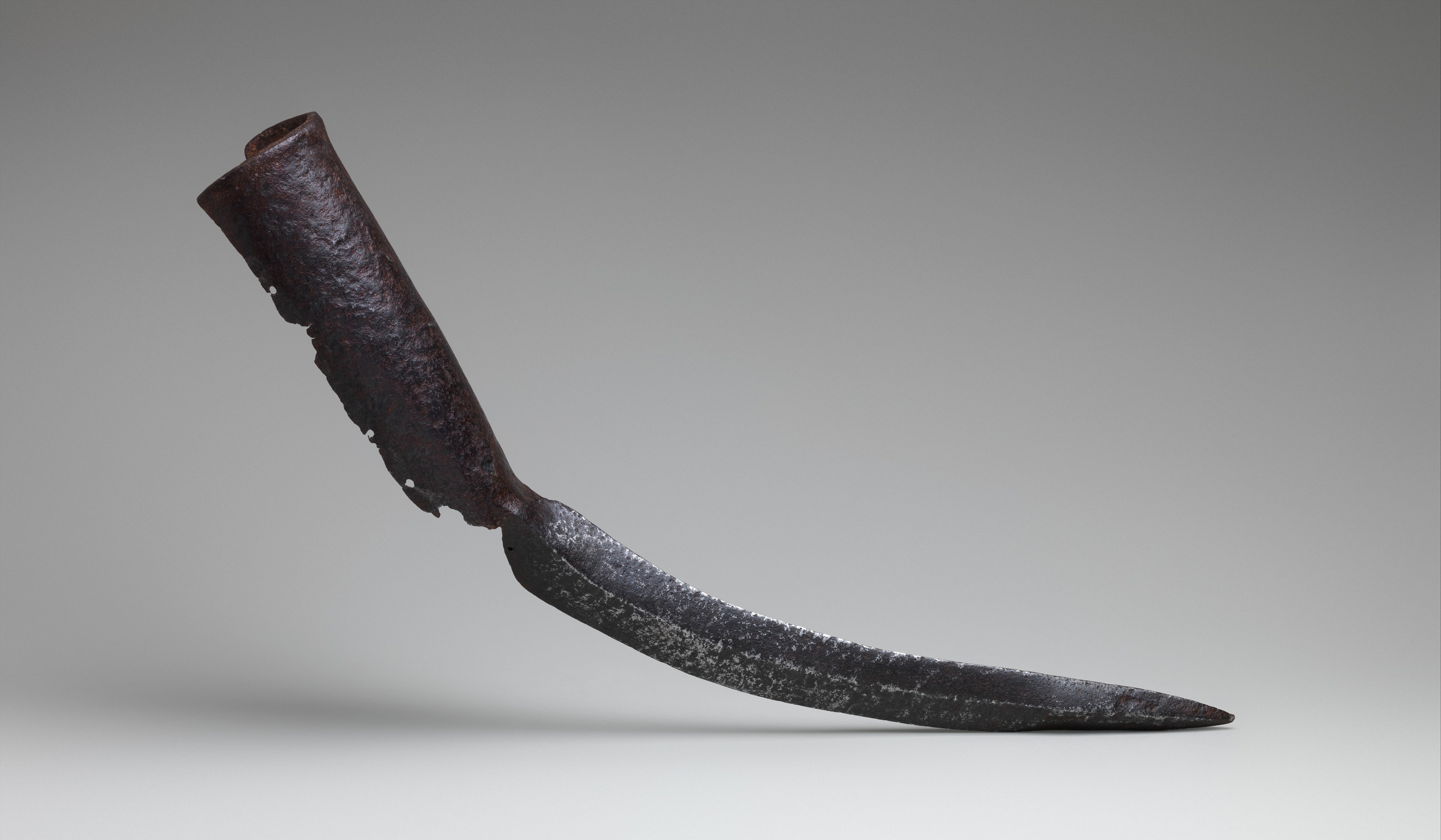
An elephant sword, these were attached to the tusks of war elephants. India 15-17th C.
Widely acknowledged as one of the greatest military leaders in history, the Carthaginian general Hannibal famously invaded Italy from the north in 218 B.C., crossing the Alps from Gaul with an army of foot-soldiers, cavalry and a handful of north African forest elephants, smaller than the Asian and African elephants familiar to today’s zoo-goers. Of the six elephants that survived the arduous mountain trek, five died the following winter. The sixth, a one-tusked elephant named Surus, became Hannibal’s mount and mobile viewing platform in the marshes of the Arno. Over the next 15 years, Hannibal won significant battles and occupied much of Italy, sometimes with reinforcement elephants shipped directly from Africa. In a 209 B.C. battle with the Roman consul Marcellus, Hannibal’s war elephants created havoc until the Romans managed to wound one, touching off a cascade of panic among the pachyderms.

The Delhi Sultanate used war elephants against the Mongol hoards led by Timur Khan in 1398; however the Indian forces were defeated. It is unknown exactly how Timur managed to solve the problems caused by the 120 elephants he encountered; one legend states that he attached straw to his camels so that when the giants of the animal kingdom got close, he could set the straw on fire, causing the camels to run forward. 

From the sixteenth century, the use of gun powder in battle made it considerably easier to bring down the animals, diminishing their effectiveness and bringing an end to their use on the battlefield. However they continued to be used for transportation and logistics in warfare right up to the Second World War, where they were used by Indian and Burma forces to transport guns and supplies, and to assist in engineering projects such as road and bridge building in remote areas where vehicles could not be used.

Illustration of a lion, leopard, rabbit, and elephant from memory/description,
taken from Tractatus de Herbis (Italy ca. 1440)
Ancient roman bed decoration depicting war elephant. 1st century AD 


This fabulous 17th century armour is composed of 5,840 plates and weighs 118kg, some plates are missing and originally the total number would be 8,439 and weigh 159kg! The tusk swords that accompany this armour (not on display) weigh in at 10kg.


Read More

Dogs of Pompeii


Those that did not flee the city of Pompeii in August of 79 AD were doomed. Buried for 1700 years under 30 feet of mud and ash and reduced by the centuries to skeletons, they remained entombed until excavations in the early 1800s. The death of the city gave historians a great insight in daily life of ancient romans. One of the aspect were animals.


Just like the Romans, Pompeians leaned toward the extravagant. Exotic animals and plants were imported, therefore, contributing to the spread of the species throughout provinces of the Roman Empire. Cats were imported from Africa and peacocks came from the Near East. Dogs served in hunting, security and as household pets. Donkeys were used in pulling carts or grindstones in mills. Remains of animals discovered at the dig were cattle, hog, goat and sheep. Proof of animal husbandry, raising poultry, doves and dormice, also were found. 

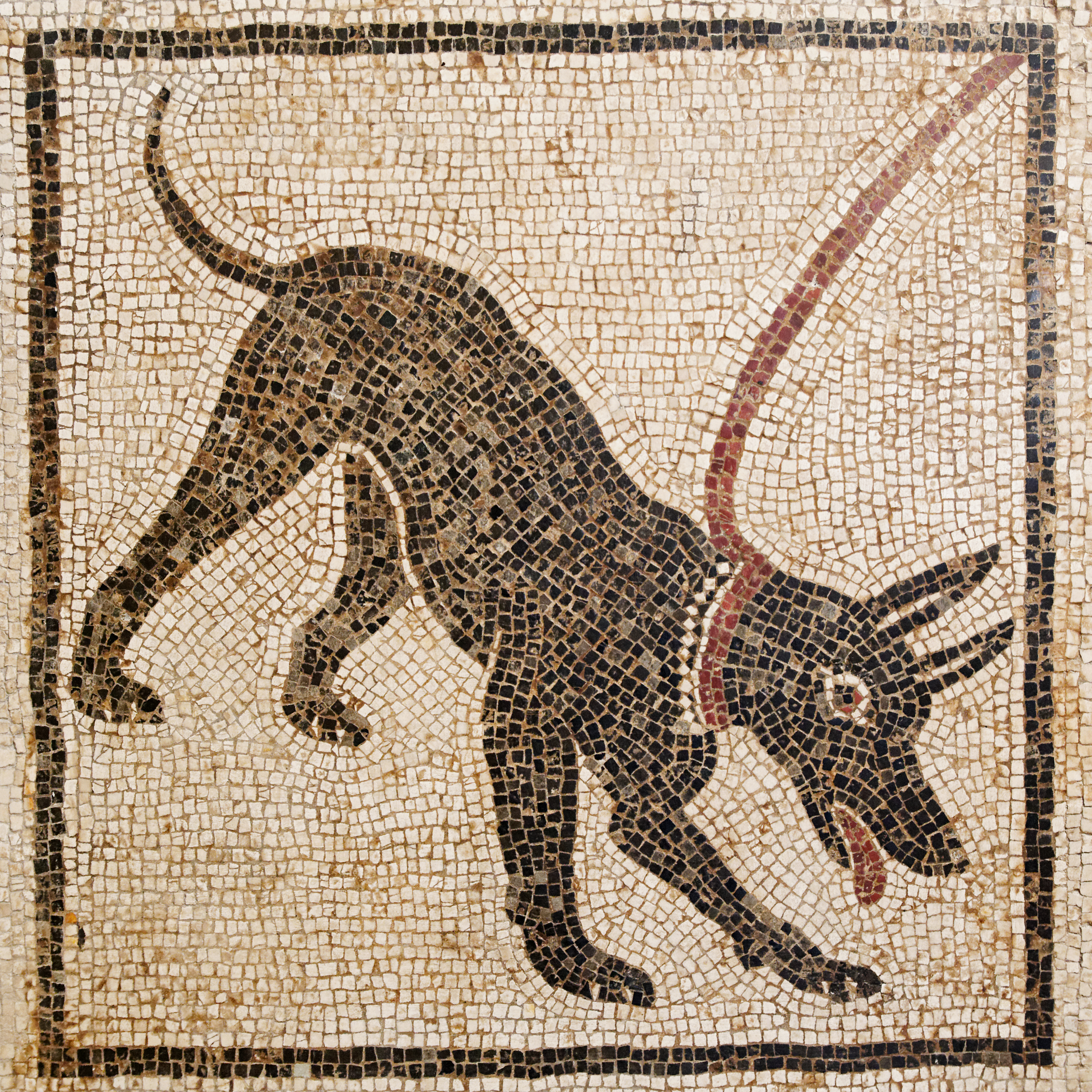
One of the most amazing traces of roman love of animals is a mosaic depicting a dog with CAVE CANEM sign below. He is one of the world's most famous dogs, the snarling, black-and-white mosaic canine and protector of the Pompeii archaeological site. Indeed, with his black hair, curled form, and bared teeth, the ancient canine has stood ready for almost 2,000 years to discourage intruders from setting foot in the Domus of the Tragic Poet, supported by the famous inscription 'Cave Canem' or 'Beware of the Dog'. Different mosaic was a warning intended to prevent visitors from stepping upon small, delicate dogs of the Italian greyhound type.

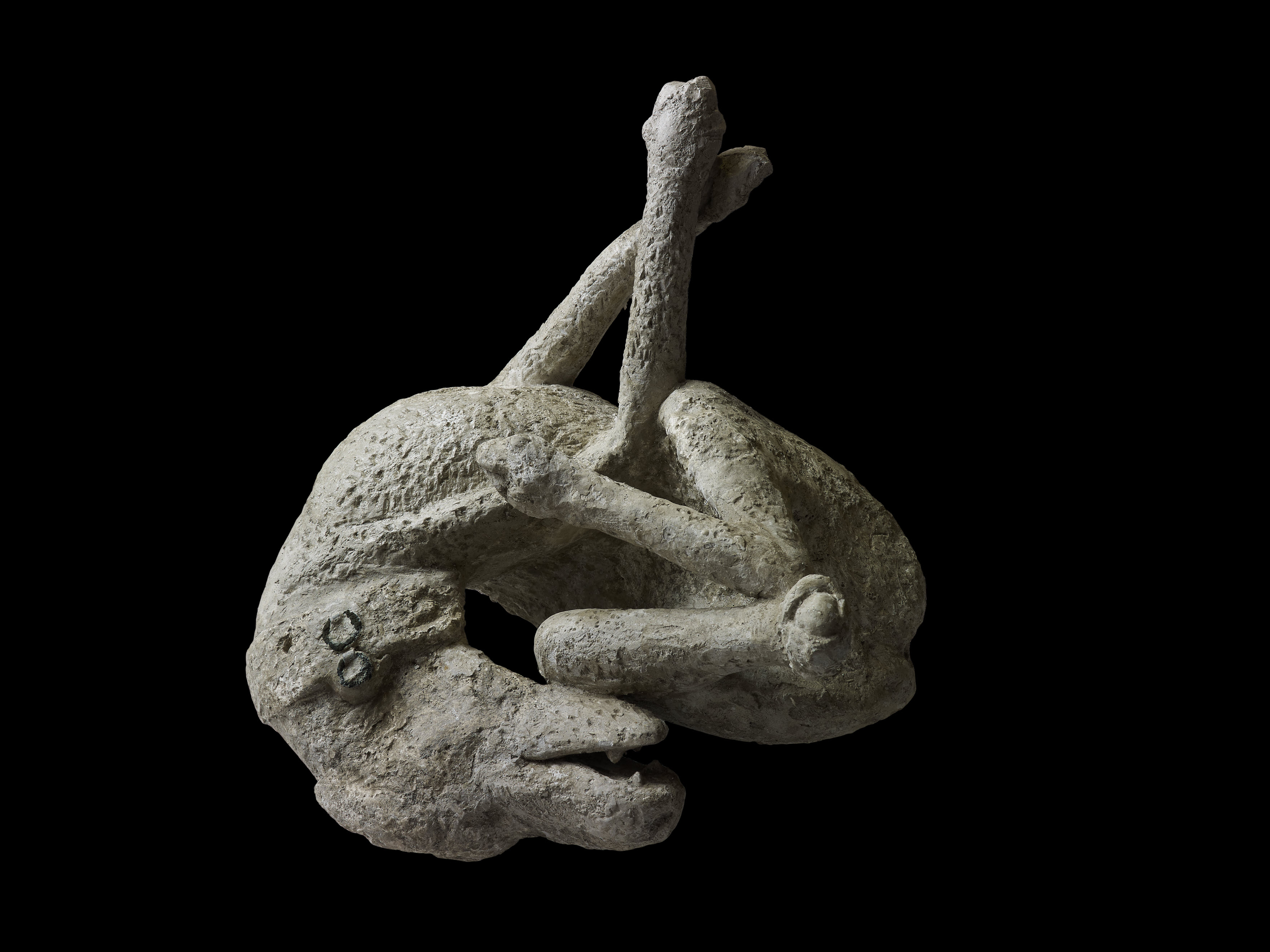
There is also one special artifacts associated with Pompeii animals: plaster cast of guard dog. He was left chained to a post to guard the House of Orpheus when the occupants fled. The bronze studs around its neck are all that remains of a collar. As the pumice fall-out deepened, the dog climbed higher — until eventually it ran out of chain and was suffocated. He died there immediately like almost thousand pompeians.


Read More

Thracian chariot found in the village of Karanovo, 1st century AD


The four-wheeled wooden chariot, its intricately carved bronze plating and 
fittings, plus the skeletal remains of two horses and a dog have been preserved in situ instead of being removed to a museum. Thracian chariots were often buried with up to eight horses and their elaborately decorated bridles. The bronze plating features scenes from Thracian mythology, like the god Eros, a jumping panther and a mythological animal with the body of a panther and the tail of a dolphin.

Four wheeled chariots are a very rare find, and this one is particularly notable because of the large diameter of the wheels: 1.2 meters, almost 4 feet. The Thracian nobleman himself was also found buried with his chariot, the animals and some wooden and leather goods thought to be horse harnesses.

The Thracians were a group of Indo-European tribes inhabiting a large area in Central and Southeastern Europe who were first mentioned in Homer’s ‘Iliad’, where they were described as allies of the Trojans in the Trojan War against the Greeks. They were known to be fierce warriors and horse-breeders who established a powerful kingdom in the fifth century BC.

They were conquered by Rome in the first century, and were assimilated by invading Slav peoples in the 6th century. They had no written language, and so left no records.Fierce warriors and horse-breeders, the Thracians were also skilled goldsmiths. 


They established a powerful kingdom in the fifth century B.C. Its capital was thought to be Seutopolis, whose ancient ruins lie under a large artificial lake near Shipka, in an area dubbed 'the Bulgarian Valley of Kings' for its many rich tombs


Read More

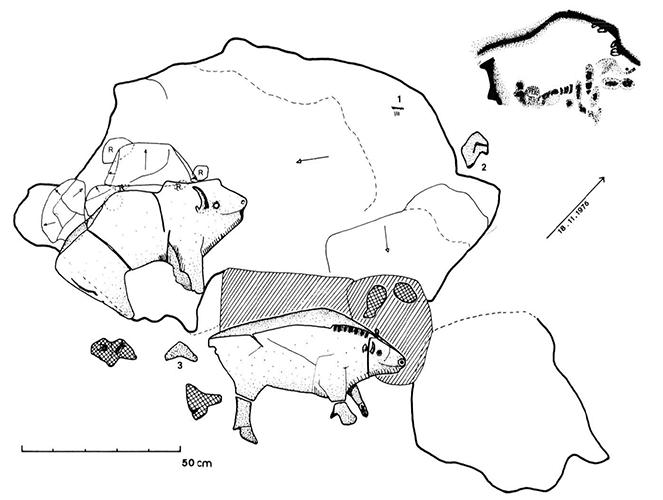
14000 years old bisons sculpture found in Le Tuc d'Audoubert cave. Ariege, France.


The cave of Tuc Audoubert was discovered by the three sons of Count Henri three Bégouën on 20 July and 10 October 1912.

Modeled out of clay from the walls of the cave, the bisons stand next to each, propped up against a small boulder in the darkness. Although they stand at a diminutive 18 inches tall by 24 inches long, their craftsmanship and durability is remarkable. Until they were discovered in the early 20th century, the bison stood alone in the damp French cave for thousands of years.

 The marks of the artist's hand and the tools used to draw the details of the face and mane are still clearly visible. Objects such as these clearly show that man was using clay for artistic expression long before the actual firing of clay was discovered. The walls of these caves also are covered with drawings of bison and other game animals, marked in carbon from the fires, as well as the earth minerals such as iron oxide and manganese, showing that these ceramic coloring materials that we still use today were known to our earliest ancestors.

The bisons' shaggy mane and beard appear to be carved with a tool, but the jaws are traced by the sculptor's fingernail. The impression given is one of immense naturalistic beauty. The female bison is ready to mate, while the Bull is sniffing the air. Both animals are supported by a central rock, and are unbelievably well preserved (proving perhaps that there was never a passage connecting the Tuc d'Audoubert cave with the Trois Freres), although they have suffered some drying out, which has caused some cracks to appear across their bodies. Also in the chamber are two other bison figures, both engraved on the ground. Prehistorians have theorized that the a small group of people (including a child) remained in the Tuc d'Audoubert cave with the sole reason of participating in certain ceremonies associated with the cave art. The remote location of the clay bison - beneath a low ceiling at the very end of the upper gallery, roughly 650 metres from the entrance, is consistent with their involvement in some type of ritualistic or shamanistic process.


Read More

A medieval manuscript that was peed on by a cat while writing.


Monk was forced to leave the rest of the page empty, drew a picture of a cat and cursed the creature with the following words:

“Hic non defectus est, sed cattus minxit desuper nocte quadam. Confundatur pessimus cattus qui minxit super librum istum in nocte Daventrie, et consimiliter omnes alii propter illum. Et cavendum valde ne permittantur libri aperti per noctem ubi cattie venire possunt.”

[Here is nothing missing, but a cat urinated on this during a certain night. Cursed be the pesty cat that urinated over this book during the night in Deventer and because of it many others [other cats] too. And beware well not to leave open books at night where cats can come.]
Read More
Powered by Blogger.

Popular Posts