Showing posts with label rome. Show all posts

Ancient Roman graveyard of...olive oil.

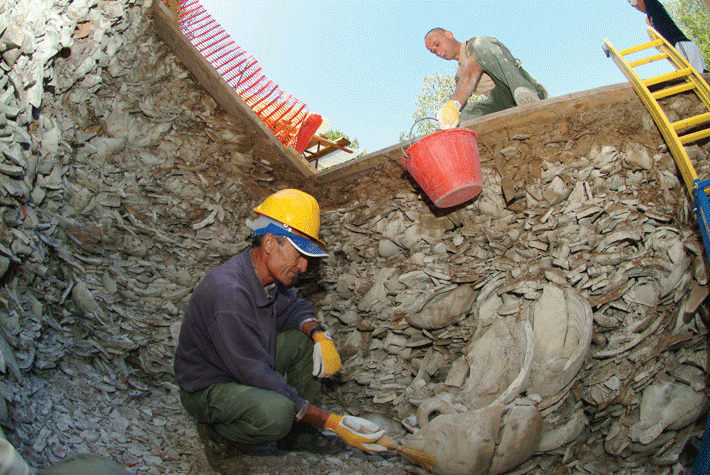
In the middle of Rome’s trendiest neighborhood, surrounded by sushi restaurants and nightclubs with names like Rodeo Steakhouse and Love Story, sits the ancient world’s biggest garbage dump—a 150-foot-tall mountain of discarded Roman amphoras, the shipping drums of the ancient world. It takes about 20 minutes to walk around Monte Testaccio, from the Latin testa and Italian cocci, both meaning “potsherd.”

Most local residents don’t know what’s underneath the grass, dust, and scattering of trees. Monte Testaccio looks like a big hill, and in Rome people are accustomed to hills. In fact it's the biggest ancient roman rubbish dump.

For more than 250 years the ancient Romans methodically piled up broken terracotta amphorae, or oil jars, creating Monte Testaccio. Also known as Monte dei Cocci (literally meaning "Mount of Shards"), the mountain of jars is located right next to the ancient Tiber River port, and the Horrea Galbae warehouses, which would have been used to store imported goods like olive oil.'

Monte Testaccio was not simply a haphazard waste dump; it was a highly organised and carefully engineered creation, presumably managed by a state administrative authority. Excavations carried out in 1991 showed that the mound had been raised as a series of level terraces with retaining walls made of nearly intact amphorae filled with shards to anchor them in place. Empty amphorae were probably carried up the mound intact on the backs of donkeys or mules and then broken up on the spot, with the shards laid out in a stable pattern. Lime appears to have been sprinkled over the broken pots to neutralise the smell of rancid oil.

As the oldest parts of Monte Testaccio are at the bottom of the mound, it is difficult to say with any certainty when it was first created. Deposits found by excavators have been dated to a period between approximately AD 140 to 250, but it is possible that dumping could have begun on the site as early as the 1st century BC.

Monte Testaccio has provided archaeologists with a rare insight into the ancient Roman economy. The amphorae deposited in the mound were often labelled with tituli picti, painted or stamped inscriptions which record information such as the weight of the oil contained in the vessel, the names of the people who weighed and documented the oil and the name of the district where the oil was originally bottled. This has allowed archaeologists to determine that the oil in the vessels was imported under state authority and was designated for the annona urbis (distribution to the people of Rome) or the annona militaris (distribution to the army). The Romans obviously had an enormous appetite for olive oil, far outstripping local resources. As a result, oil was imported from all across the far flung empire, and markings known as "tituli picti" on the jars show that they originated primarily from Spain, Libya, and Tunisia. The huge numbers of broken amphorae at Monte Testaccio illustrate the enormous demand for oil of imperial Rome, which was at the time the world's largest city with a population of at least one million people. It has been estimated that the hill contains the remains of as many as 53 million olive oil amphorae, in which some 6 billion litres (1.3 billion imperial gallons/1.6 billion U.S. gallons) of oil were imported. Studies of the hill's composition suggest that Rome's imports of olive oil reached a peak towards the end of the 2nd century AD, when as many as 130,000 amphorae were being deposited on the site each year.

Monte Testaccio also had a religious significance; it was formerly used on Good Friday to represent the hill of Golgotha in Jerusalem, when the Pope would lead a procession to the summit and placed crosses to represent those of Jesus and the two thieves crucified alongside him. Monte Testaccio is still crowned with a cross in commemoration of the event.
Read More

Dogs of Pompeii


Those that did not flee the city of Pompeii in August of 79 AD were doomed. Buried for 1700 years under 30 feet of mud and ash and reduced by the centuries to skeletons, they remained entombed until excavations in the early 1800s. The death of the city gave historians a great insight in daily life of ancient romans. One of the aspect were animals.


Just like the Romans, Pompeians leaned toward the extravagant. Exotic animals and plants were imported, therefore, contributing to the spread of the species throughout provinces of the Roman Empire. Cats were imported from Africa and peacocks came from the Near East. Dogs served in hunting, security and as household pets. Donkeys were used in pulling carts or grindstones in mills. Remains of animals discovered at the dig were cattle, hog, goat and sheep. Proof of animal husbandry, raising poultry, doves and dormice, also were found. 

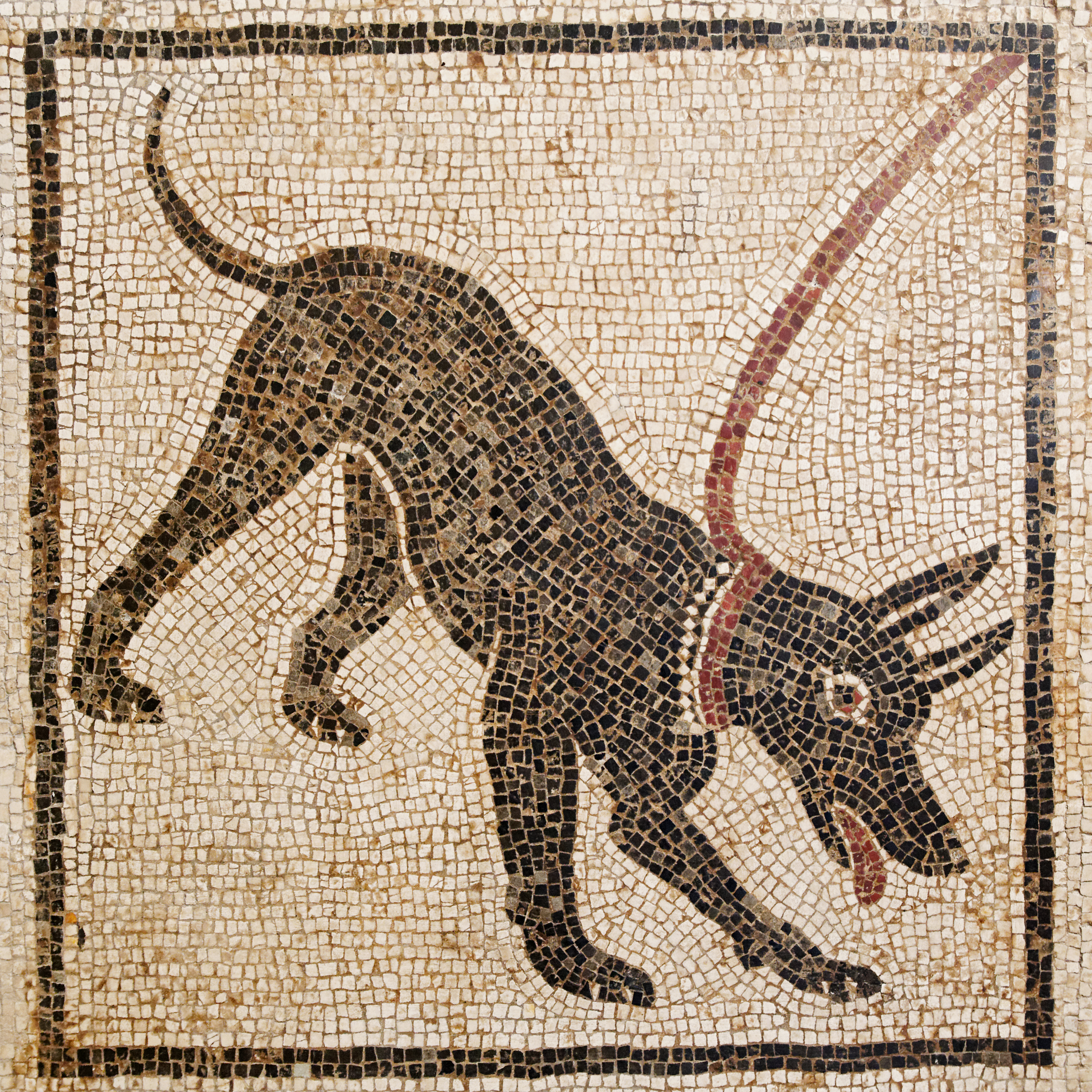
One of the most amazing traces of roman love of animals is a mosaic depicting a dog with CAVE CANEM sign below. He is one of the world's most famous dogs, the snarling, black-and-white mosaic canine and protector of the Pompeii archaeological site. Indeed, with his black hair, curled form, and bared teeth, the ancient canine has stood ready for almost 2,000 years to discourage intruders from setting foot in the Domus of the Tragic Poet, supported by the famous inscription 'Cave Canem' or 'Beware of the Dog'. Different mosaic was a warning intended to prevent visitors from stepping upon small, delicate dogs of the Italian greyhound type.

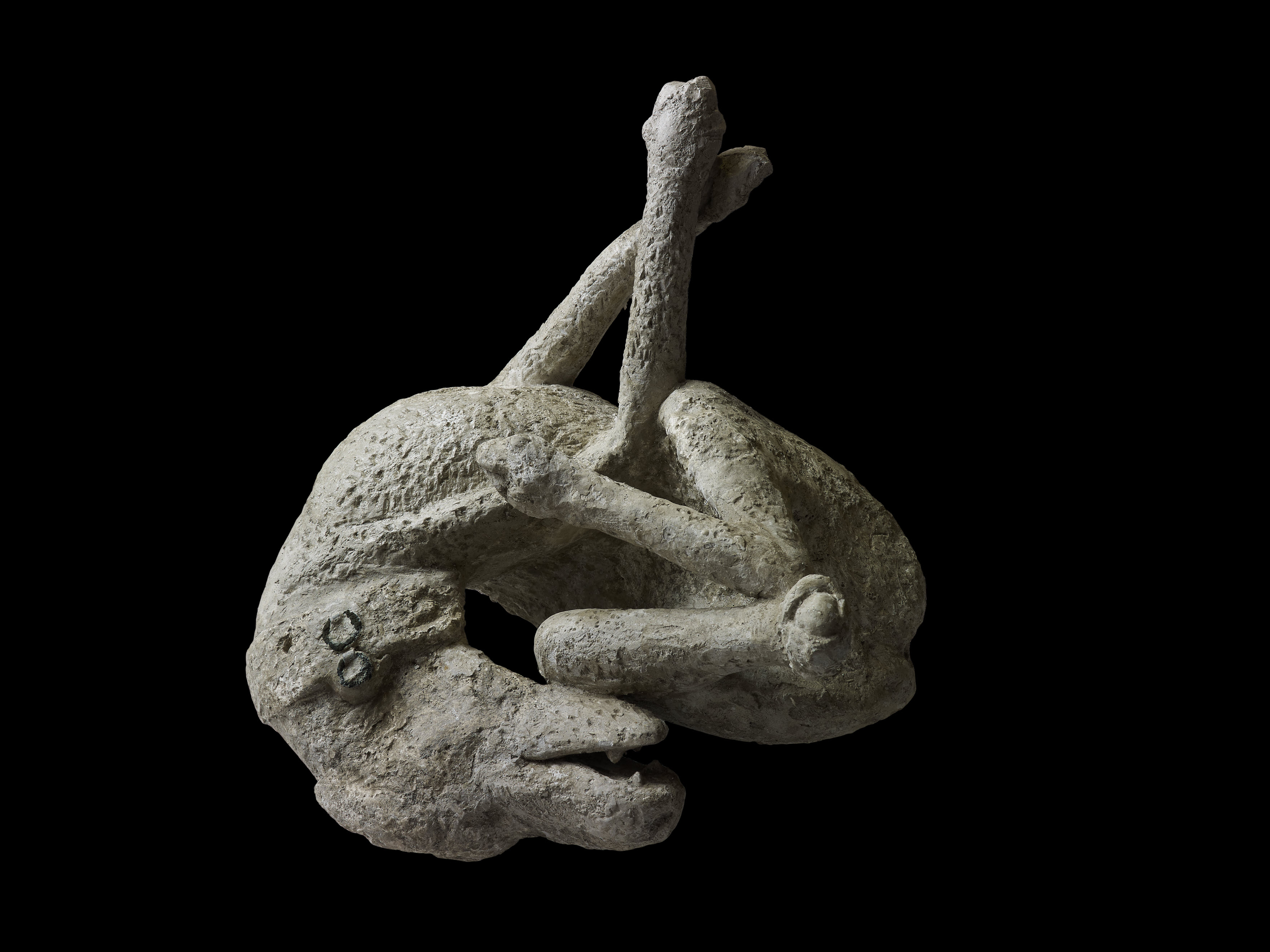
There is also one special artifacts associated with Pompeii animals: plaster cast of guard dog. He was left chained to a post to guard the House of Orpheus when the occupants fled. The bronze studs around its neck are all that remains of a collar. As the pumice fall-out deepened, the dog climbed higher — until eventually it ran out of chain and was suffocated. He died there immediately like almost thousand pompeians.


Read More

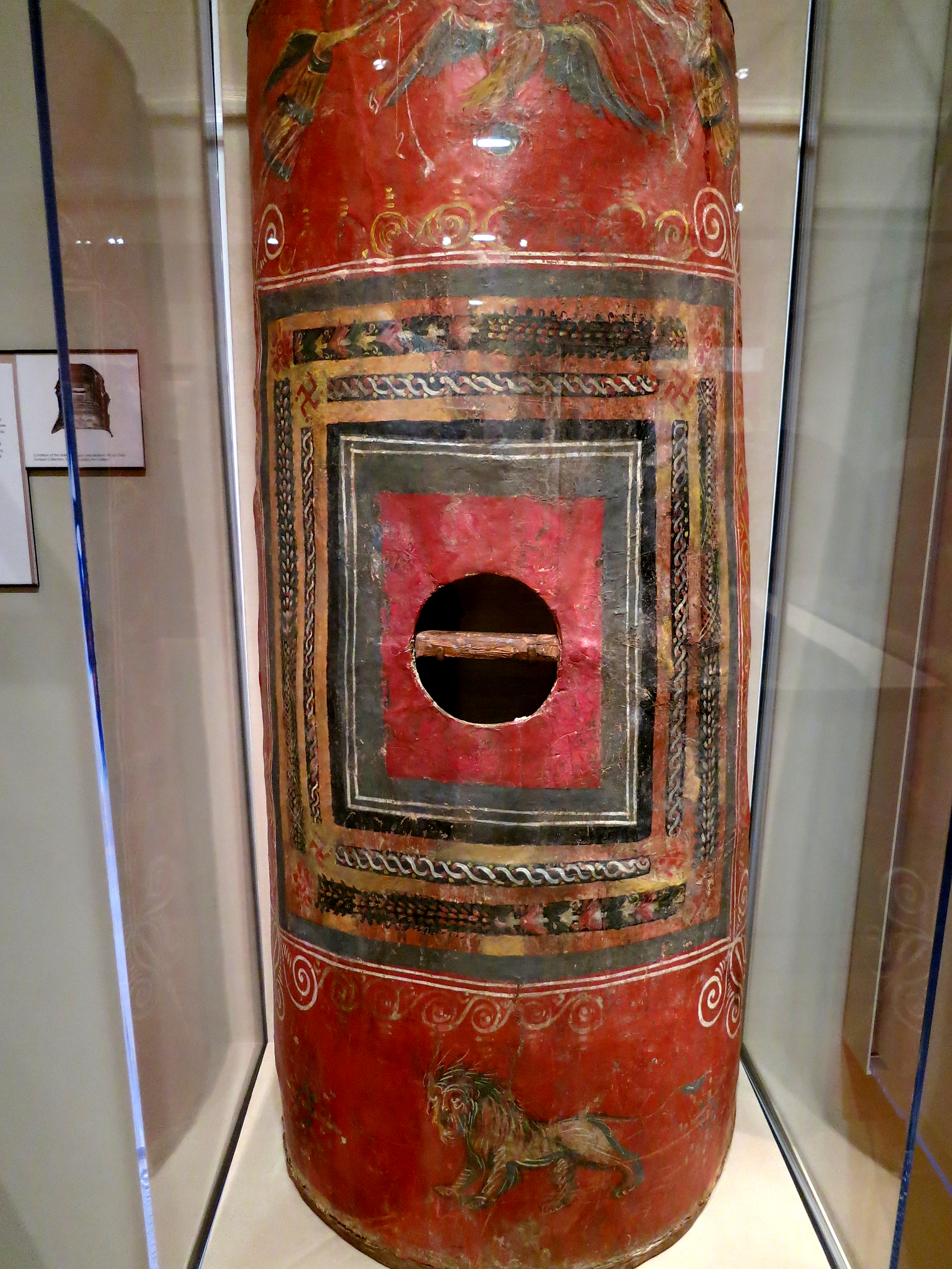
Roman scutum shield. This is the only known surviving example of this kind of shields.


This is the only known surviving example of the semicylindrical shield known as a scutum, used by Roman legionaries and known from literary sources. Found flattened, in thirteen pieces, and missing its umbo (central boss). The painted decoration reflects Roman iconography of victory, including an eagle with a laurel wreath, winged Victories, and a lion.

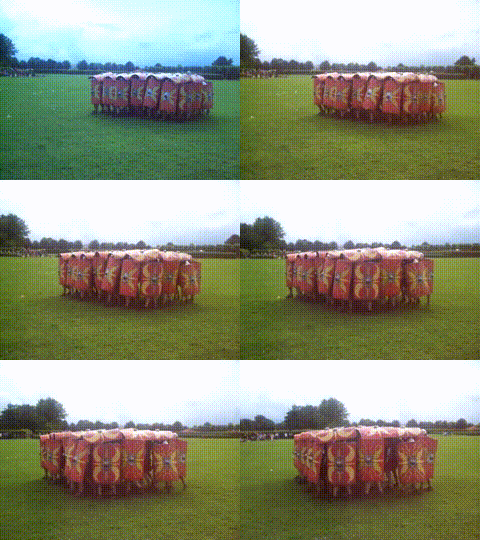
Scutum was famous for the Testudo (tortoise) formation, used commonly by the Roman Legions during battles, particularly sieges.
In the testudo formation, the men would align their shields to form a packed formation covered with shields on the front and top. The first row of men, possibly excluding the men on the flanks, would hold their shields from about the height of their shins to their eyes, so as to cover the formation’s front. The shields would be held in such a way that they presented a shield wall to all sides.

The scutum was a 10-kilogram (22 lb) large rectangle curved shield made from three sheets of wood glued together and covered with canvas and leather, usually with a spindle shaped boss along the vertical length of the shield. The only surviving example, from Dura-Europos in Syria, was 105.5 centimetres (41.5 in) high, 41 centimetres (16 in) across, and 30 centimetres (12 in) deep (due to its semicylindrical nature), with an unknown thickness. It was well made and extremely sturdy.


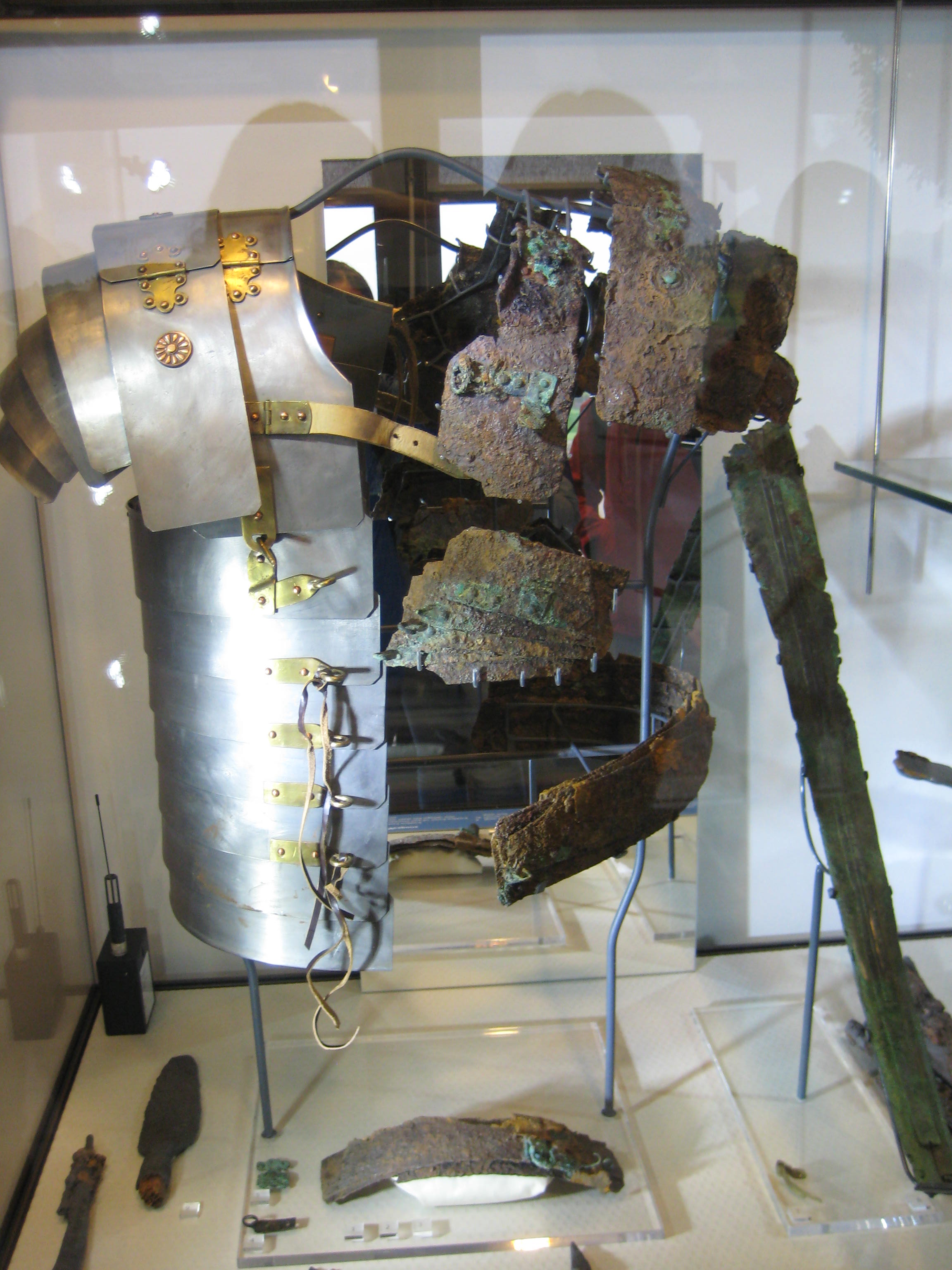
Speaking of Roman Legionaries there is also a very rare artifact: remains of their famous armour called lorica segmentata. The plates of lorica segmentata armour were soft iron inside and (some at least) were mild steel on the outside, making the plates hardened against damage without becoming brittle. This was a deliberate act, called case hardening, and is carried out by enriching the surface iron with carbon from organic materials packed tightly around the piece which is then heated in a forge. The strips were arranged horizontally on the body, overlapping downwards, and they surrounded the torso in two halves, being fastened at the front and back. The upper body and shoulders were protected by additional strips ("shoulder guards") and breast- and backplates. The form of the armour allowed it to be stored very compactly, since it was possible to separate it into four sections each of which would collapse on itself into a compact mass. The fitments that closed the various plate sections together (buckles, lobate hinges, hinged straps, tie-hooks, tie-rings, etc.) were made of brass. In later variants dating from around 75–80 A.D., the fastenings of the armour were simplified. Bronze hinges were removed in favour of simple rivets, belt fastenings utilised small hooks, and the lowest two girdle plates were replaced by one broad plate.


Read More

2,000-year-old roman face cream with visible, ancient fingermarks

The six-centimetre-wide canister, currently on display in the Museum of London, was discovered in July 2003 by Pre-Construct Archaeology at the site of a Roman temple complex dedicated to the god Mars Camulus. It dates from approximately 150 AD.


The contents were so well preserved (you can still see finger marks in the cream) that the team was able to recreate the product from fresh ingredients. The main constituent of the cream was animal fat mixed with starch and tin oxide.

This rare find was then chemically analyzed by University of Bristol’s Richard Evershed, who has a quirky research niche: Figuring out the composition of ancient medical, food and cosmetic concoctions, usually by studying residues leftover on old pottery. (He made news last December by reporting that the fatty deposits on pieces of ancient Polish pottery are Northern Europe’s oldest evidence of cheese-making.)

So what precisely was in the creamy white ointment?

In a 2004 Nature paper, Evershed’s team announced that “the Londinium cream” was primarily made up of animal fat, probably from cattle or sheep. They also detected starch, which was likely isolated by boiling roots and grains in water. In addition, the cream contained a tin dioxide mineral called cassiterite with the chemical formula SnO2.

This cream had a pleasant texture when rubbed into the skin. Although it felt greasy initially, owing to the fat melting as a result of body heat, this was quickly overtaken by the smooth, powdery texture created by the starch. Remarkably, starch is still used for this purpose in modern cosmetics. The addition of SnO2 to the starch/fat base confers a white opacity, which is consistent with the cream being a cosmetic. Fashionable Roman women aspired to a fair complexion, and the Londinium cream may have served as a foundation layer
Read More

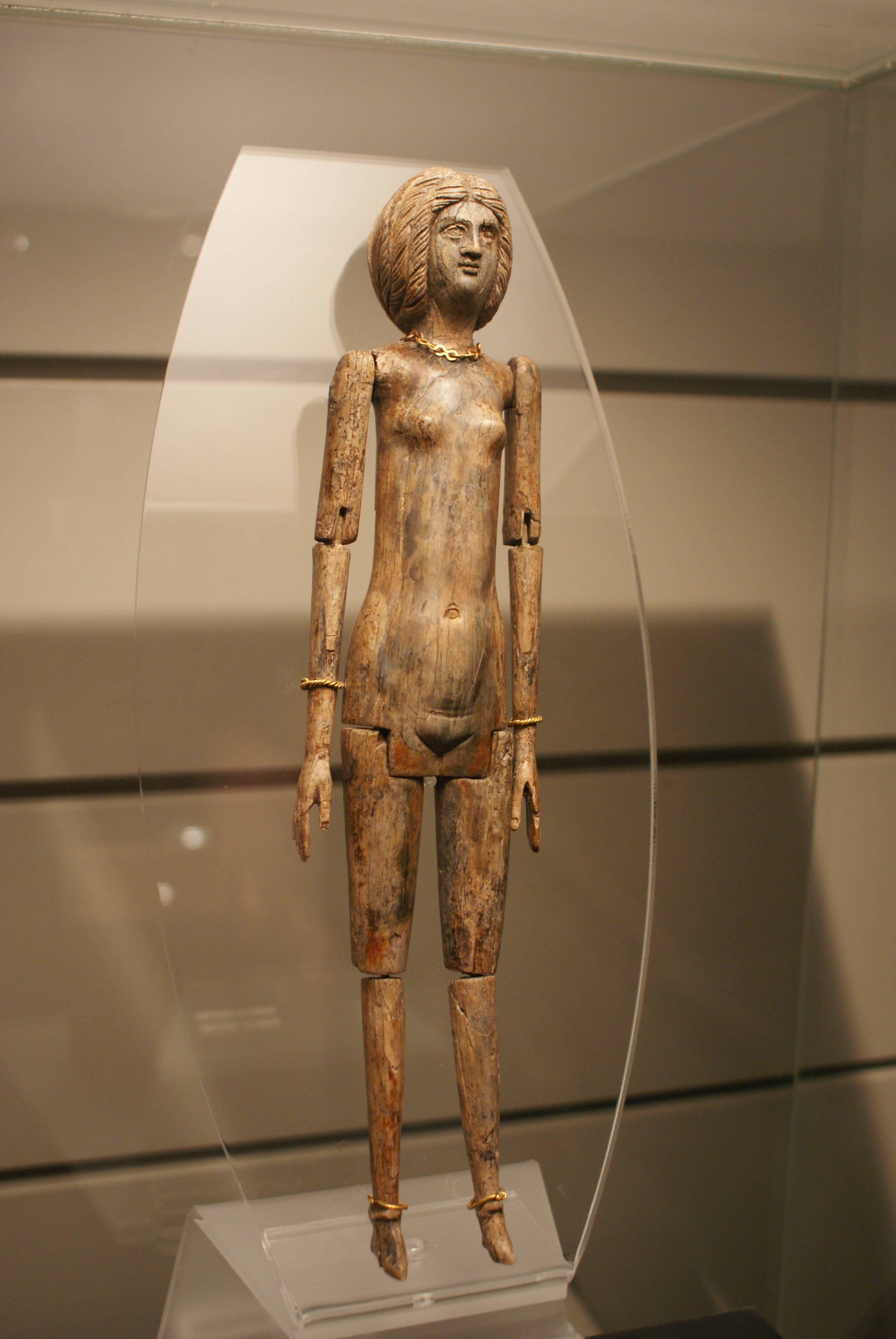
Ancient Roman ivory doll with real gold jewellery.

She's the most perfect doll specimen to survive from the Roman world. She looks as if she's made of wood, but in fact she's ivory.

She's a woman with very cleverly jointed limbs, she's got a rather posh, fashionable hairdo, and on her hand she's got a little gold ring. found in a big stone coffin of a woman called Creperia Tryphaena.

To judge from the skeleton, Creperia was about 20. So the burying a doll with a 20 years old girl is rather unusual in the roman world.

Roman women were made for marriage and for breeding children. And in fact, some Roman writers tell us that just before they do get married, Roman girls would go along to a temple and they would leave their dolls in the temple.

The young girl must have belonged to a very wealthy family, all of the jewellery of a doll was made of real gold. The early death must have been a shock for the family, so leaving the doll with her was some kind of farewell ceremony.


Read More

Spintrii, ancient tokens used to enter Roman brothels

The rare Roman erotic tokens dating back to the 1st century AD called Spintriae were originally struck from an alloy of brass/bronze. One side of the token depicts the sexual act - always a man with a woman while the other side bears a Roman numeral within a wreath. The numbers I to XVI are known with numbers exceeding XIII being very rare. We do not know today why the tokens were made. Some experts claim that the main function was to gain admission to brothels and ´draw the service´ depicted on the token. It is thought that the depiction of the service was to overcome the language barrier between the peoples of the Roman Empire. 

For example a Syrian sailor who just arrived in Rome without knowing a word in Latin would know exactly what to expect based on the illustration. Some theorise they were special gaming tokens similar to contemporary erotic cards or numerical tokens used in some board games. These erotic tokens had a parallel in the Roman tokens serving as admission tickets to the circus and the then ´meal vouchers´. The latter mostly bore the portrait of the emperor on one side. Yet it was unthinkable to depict the emperor on a token with erotic motifs and the reverse side of the Spintriae therefore bears a numerical designation perhaps the value of the token. According to the currently prevailing opinion they were indeed tokens for sexual services which were distributed for free although not as extensively as the tokens for bread and circuses.
Read More
Powered by Blogger.

Popular Posts