Showing posts with label death. Show all posts

The breastplate of cuirassier 23 years old Antoine Fraveau, struck and killed by a canonball. June, 1815, serving Napoleon Bonaparte at the Battle of Waterloo


He was just 23 when a deadly cannonball struck him during one of the Waterloo skirmishes. He served as a of Napoleon's heavy cavalrymen during "The Hundred Days."  The Waterloo campaign is referred to as The Hundred Days, because such is the amount of time between Napoleon's return to France after his escape from the island of Elba and his final  defeat near the small town of Waterloo, Belgium.  Heavy calvarymen, such as Antoine Favreau, played a significant role in Napoleon's victories.  They would be wasted in the defeat which ended the Napoleonic Wars.


Favreau served as a Carabinier a Cheval -- a heavy cavalryman who wore armour on the battlefield.  Specifically, Favreau would have worn a helmet made of brass and iron with a red horsehair crest.  On his chest and back he wore  a brass and iron breast and backplate over his white tunic.  As a mounted man, he wore white leather riding pants and black riding boots that extended past the knee.  His primary weapon was a long, straight bladed sword, but he would also have carried a pair of pistols in holsters mounted on his saddle and a carbine.   The Carabiniers a Cheveaux must have been something to see with the sun shining off of their brass armour.

Napoleon was a master of battlefield tactics.  Many of his victories involved flanking maneuvers and deception   rather that brute force to win the day.  Waterloo was different.  At Waterloo, Napoleon would attempt brute strength to push Wellington and his multi-national army off of the field.   Much like Robert E. Lee, Napoleon attempted to defeat his enemy with massed  assaults on the flanks as well as the center. 

Napoleon was not well at Waterloo and the fates took advantage of his predicament.   In the afternoon when by chance Napoleon was indisposed, Wellington issued an order for his entire line to redeploy several yards to the rear.  Michel Ney, Napoleon's second in command, misinterpreted the redeployment to be a retreat.  As any good commander seeing a retreating enemy would,  Ney ordered the French cavalry to charge and rout the Anglo-Allied army. 

The night of June 17, 1815 was marked by torrential rain.  Thus, the ground was saturated when Ney's charge took place.  The French cavalrymen charged down the ridge, across the valley and up the opposite ridge to a plateau where they met the enemy infantry formed in squares.  In the days of linear tactics,  infantry  threatened by cavalry formed square.  The defensive position required the men in the  front rank of each side of the square to kneel with the butts of their muskets grounded and the bayonets angled upwards and out.  The remaining men faced out and fired at the cavalry.  Horses will not charge into the line of bayonets.  Thus, the charge is broken and the cavalrymen are picked off.  To defeat infantry in square,  either  infantry or artillery were brought up with the cavalry.  The infantry in square either stayed in square and were blown apart by musket or  cannon fire or the broke square and were run down and sabred by the cavalry. Because of the wet soil, the French cavalry could barely get above a gallop. They were under artillery fire the whole way and upon cresting the hill found infantry not retreating, but in square.  Looking behind, a French cavalryman saw neither supporting infantry or artillery.  No one had his back.  One charge and Ney should have known everything -- the soil is too wet to reach a charge,  British artillery is effective and, most importantly, the British are not retreating, but rather are formed in square.   While the initial charge was not improper, the successive charges ordered by Ney were.  Again and again the French cavalry were sent against the British squares.  Ney could have sent infantry and artillery support, but he didn't.  Ney could have ordered the British cannon hauled off or spiked (the British artillery man serviced their guns until the last second and then ran to the safety of the squares), but he didn't.  Rather, he wasted a valuable asset of Napoleon's army.  Ney failed his commander. While the French defeat cannot be blamed solely upon poor old Ney, he shares a good portion of the blame. The battlefield at Waterloo was roughly a mile deep by 2 miles wide, held nearly 200,000 men over the course of the day and and estimated 41,000 cannonballs we’re fired over the course of the battle.

But what about Antione Favreau?  Well, he died at Waterloo.  He suffered a mortal would when a cannon ball pierced his gleaming breast plate. A recent recruit, Fauveau’s height of 1.79 metres gave him the ideal stature for a heavy cavalry regiment. These, after all, were intended to be big men on big horses, riding down the enemy by the weight of their charge. The young man’s service papers also record that he had a “long, freckled face with a large forehead, blue eyes, hooked nose, and a small mouth”. Family legend has it that when his call-up papers arrived, François-Antoine was on the point of getting married, so his brother joined up, and died, in his place. Yet whoever was wearing it on 18 June 1815, this cuirass serves to emphasise the brutality of Napoleonic warfare at a most personal level.



Read More

Pompeii & Herculaneum: the dead do tell talles

Like Pompeii, Herculaneum was a Roman city wiped out by the eruption of Vesuvius in 79 AD. The story of its destruction is different, however. During the initial phase of eruption, winds carried ash and pumice over Pompeii for many hours, burying the town in over two meters of material. Herculaneum, though closer to the volcano, escaped this rain of debris for almost a day, giving the residents plenty of time to assess the danger. Initially, few human remains were found at Herculaneum. So it was assumed that the population had wisely escaped. Then in 1982, a shocking discovery was made. 

Along what was then the waterfront, piles of remains were found on the beach and in large vaulted chambers. Yet as the 300 men, women and children sat in the semi-darkness debating whether to return to their homes or flee down the coast, a scorching cloud of superheated volcanic ash burst into the crowded shelters. They were instantly fried alive. As the volcano spent its fuel, the vast cloud it created began to collapse, causing deadly pyroclastic surges and flows. The first surge raced down at a hundred feet per second. It blasted the people on the beach with a cloud superheated to 750° F. At such temperatures, body tissues practically vaporize and the brain boils. From their postures, we can tell they died instantly. After the surge came the flow, burying them with heavier volcanic material.

Now, unlike the victims of Pompeii, these were lying below the water table. The fine volcanic material was moist, and fully enveloped them. The water was pH balanced, so the bones were well preserved. The result of this terrible event was an archeologist's dream: a significant sample of an ancient population, men, women, and children, who all died of the same causes at the same time. This can yield information you can't get from a cemetery, where people are buried over a long period. The skeletons were still fully articulated and just as they died. Skull depressions show many of them were routine head-scratchers; this means they were lousy, poor things. Their teeth had fewer cavities than ours—sugar was unknown to them. Dental wear shows some used their teeth at work, most likely as fishermen, mending their nets. In general, this population had excellent teeth with few lesions and edge-bite occlusion. Twenty-seven percent had some degree of hypo plastic lines in the dental enamel, suggesting that childhood illnesses were common.

The ancient population was taller than modern Neapolitans, but shorter than modern Americans. Also, their children grew at a slower rate than Americans of the same ages.

Biochemical analysis suggests that their diet was more dependent on sea fish than on red meat. Lead analysis shows slightly higher values for the adult male population than for the females.

Some degree of arthritis was apparent in 42% of the population. Traumata occurred to 22.7% of these people. Signs of healed anemia in any degree are present in 34.1%; etiology could have been nutritional deficiency or heterozygotes thalassemia. Two individuals and their pathologies are presented: one case of congenital bilateral hip dysplasia and the other of healed rickets.


Aprox 45 years old woman was found buried in ash with her gold jewellery: rings and braclets.
This photo was made few hours after discovery. 2000 years old jewellery was in perfect condition. 

This man, found on the ancient shore of Herculaneum, was wearing a belt of silver and bronze plaques and carrying a long sword and stabbing dagger. He is thought to be a soldier. The volcanic surge hurled him down with huge force, breaking his bones. His blackened skeleton shows death was instantaneous. Exposed to the full force and high temperature of the surge, his body was burnt to the bone in seconds. 


Read More

Did the Aztecs really practice human sacrifice?

Yes they did. And they were really cruel.

The Aztec civilization which flourished in Mesoamerica between 1345 and 1521 CE has gained an infamous reputation for bloodthirsty human sacrifice with lurid tales of the beating heart being ripped from the still-conscious victim, decapitation, skinning and dismemberment. All of these things did happen but it is important to remember that for the Aztecs the act of sacrifice - of which human sacrifice was only a part - was a strictly ritualised process which gave the highest possible honour to the gods and was regarded as a necessity to ensure mankind’s continued prosperity. The Aztec gods and goddesses also required the living hearts of humans for nourishment. All hearts were good, but the bravest captives were considered to be particularly nourishing to the Aztec gods.

Their chief god was Huitzilpochtli (the Hummingbird Wizard) who represented the sun, the warrior, and fought the Aztecs' battles with the other gods to ensure the Aztecs' survival. Huitzilpochtli needed food to nourish him so he could continue to fight. His preferred food was human blood. In order to keep feeding Huitzilpochtli, the Aztecs warred continuously. Their army was of the utmost importance, and they had several different factions of warriors. The Knights of the Eagle and the Knights of the Jaguar were two such bodies of troops. These were the men who went forth to capture suitable human sacrifices. Another source of sacrificial victims was the ritual ball-games where the losing captain or even the entire team paid the ultimate price for defeat. Children too could be sacrificed, in particular, to honour the rain god Tlaloc in ceremonies held on sacred mountains. It was believed that the very tears of the child victims would propitiate rain. Slaves were another social group from which sacrificial victims were chosen, they could accompany their ruler in death or be given in offering by tradesmen to ensure prosperity in business.

The killing was bloody. The most important place where sacrifices occurred was the Huey Teocalli, the Templo Mayor (Great Temple) of Tenochtitlan. Here a specialized priest with a sharp sharp knife removed the heart (by cutting below the chest) from the victim and the body was thrown down the steps of the pyramid, while his head was cut off and placed on the tzompantli, or skull rack. However, not all sacrifices took place on top of pyramids. In some cases mock-battles were organized between the victim and a priest, where the priest fought with real weapons and the victim, tied to a stone or a wooden frame, fought with wooden or feathered ones. Children sacrificed to Tlaloc were often carried to the god’s sanctuaries on top of the mountains that surround Tenochtitlan and the Basin of Mexico in order to be offered to the god. Those sacrificed to Xipe Totec were also skinned, most probably in imitation of seeds shedding their husks.

Estimates suggest 20,000 people a year were sacrificed by the Aztec royalty. After the sacrifice, the heads of victims could be displayed in racks (tzompantli), depictions of which survive in stone architectural decoration, notably at Tenochtitlán. The flesh of those sacrificed was also, on occasion, eaten by the priests conducting the sacrifice and by members of the ruling elite or warriors who had themselves captured the victims.


Top images: Aztec human skulls with decorated with the mosaics

A jaguar-shaped cuauhxicalli.
This altar-like stone vessel was used to hold the hearts of sacrificial victims.


Tecpatl obsidian sacrificial knife, Aztec

Mosaic ceremonial knife


Aztec zoomorphic death whistle, click on image to listen


Read More

Viking's unlucky trip to Dorset

In 2009 during the construction of the Weymouth Relief Road in Dorset archaeologists from Oxford made one of the most exciting, and disturbing, archaeological discoveries in Britain in recent years.

They have found a mass grave of 54 skeletons and 51 heads of men executed some time between AD 910 and 1030. Naked, beheaded, and tangled, the bodies of 51 young males  have been identified as brutally slain Vikings. For more than 1,000 years this bloody roadside act was forgotten, one of many atrocities in the long and violent struggle between the Anglo-Saxons and the Norse invaders. On November 13, A.D. 1002, Æthelred Unræd, ruler of the English kingdom of Wessex, “ordered slain all the Danish men who were in England,” according to a royal charter. This drastic step was not taken on a whim, but was the product of 200 years of Anglo-Saxon frustration and fear.

The 54 skeletons were all of males, almost all aged from their late teens to around 25 years old, with a handful of older individuals. They had all been killed at the same time with a large, very sharp weapon such as a sword. They had not been cleanly killed, as many of them had suffered multiple blows to the vertebrae, jawbones and skulls. One man had his hands sliced through, suggesting that he had attempted to grab the sword as it was being swung towards him.

They had no obvious battle wounds and were most likely captives. Judging from the lack of any remains of clothing or other possessions, they had probably been naked when they were thrown into the pit. There are more bodies than skulls, suggesting that a couple of the heads – perhaps of high-ranking individuals – were kept as souvenirs or put on stakes.

A chemical analysis of teeth from ten of the men showed they grew up in countries where the climate is far colder than Britain - with one individual thought to have come from within the Arctic Circle. Now we know that they were Viking mercenaries. We know that for their teeth, which some of them had grooves filed into his two front teeth. Archaeologists think it may have been designed to frighten opponents or show status as a great fighter. This is a typical for Jomsvikings, a group of warriors from eastern Denmark who were feared across Europe and became so notorious they spawned their own saga. The Jomsvikings were forbidden from showing fear, and if executed would request to face the blow as proof of their bravery.


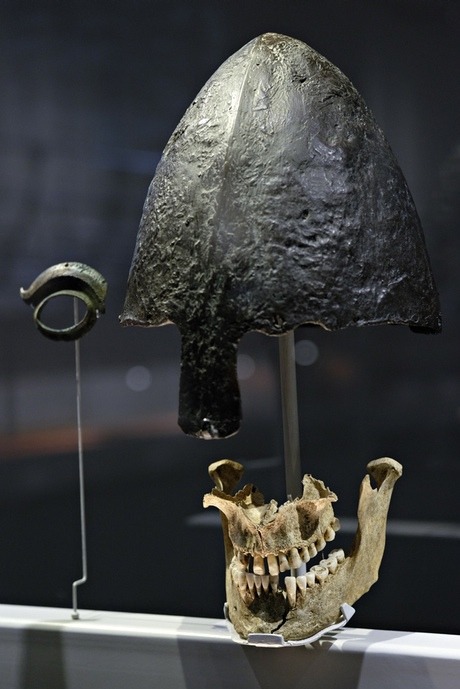
Few kilometers from the mass execution archaeologist have found helmet, axe and jawbone belonging to high rank Viking. There is a speculation that it's one of three missing heads from the Dorset execution. Maybe a leader of band whose head was taken as a trophy? Dating of the helmet gave us an answer that it's highly possible. 

Not only is it one of the most dramatic Viking finds of recent years, it is particularly important in providing a very different perspective to the usual view of Viking military success in England in that period


Read More

To be immortal - chinese jade burial suites, 2200 years old.

Just 15 of the extraordinary head-to-toe jade suits that promised immortality to the Chinese imperial family have ever been found. During the reign of Chinese dynasties, the ancient Chinese believed that when a person dies, he or she entered into the after life. Death was comprehended as a prolongation of life, and an emperor's mausoleum was his after-life palace, mirroring his regal life on earth. All of the daily comforts of their past life such as servants, attendants, objects, pets, wives, guardians, concubines, food and drink were to be provided for them in the after life. This was accomplished by burying all of these things with the deceased when they died. As an ancient Chinese philosopher said, "Treat death as life." It was not uncommon to kill people in order to be buried with their master, but as dynasties evolved clay replicas replaced the real thing.

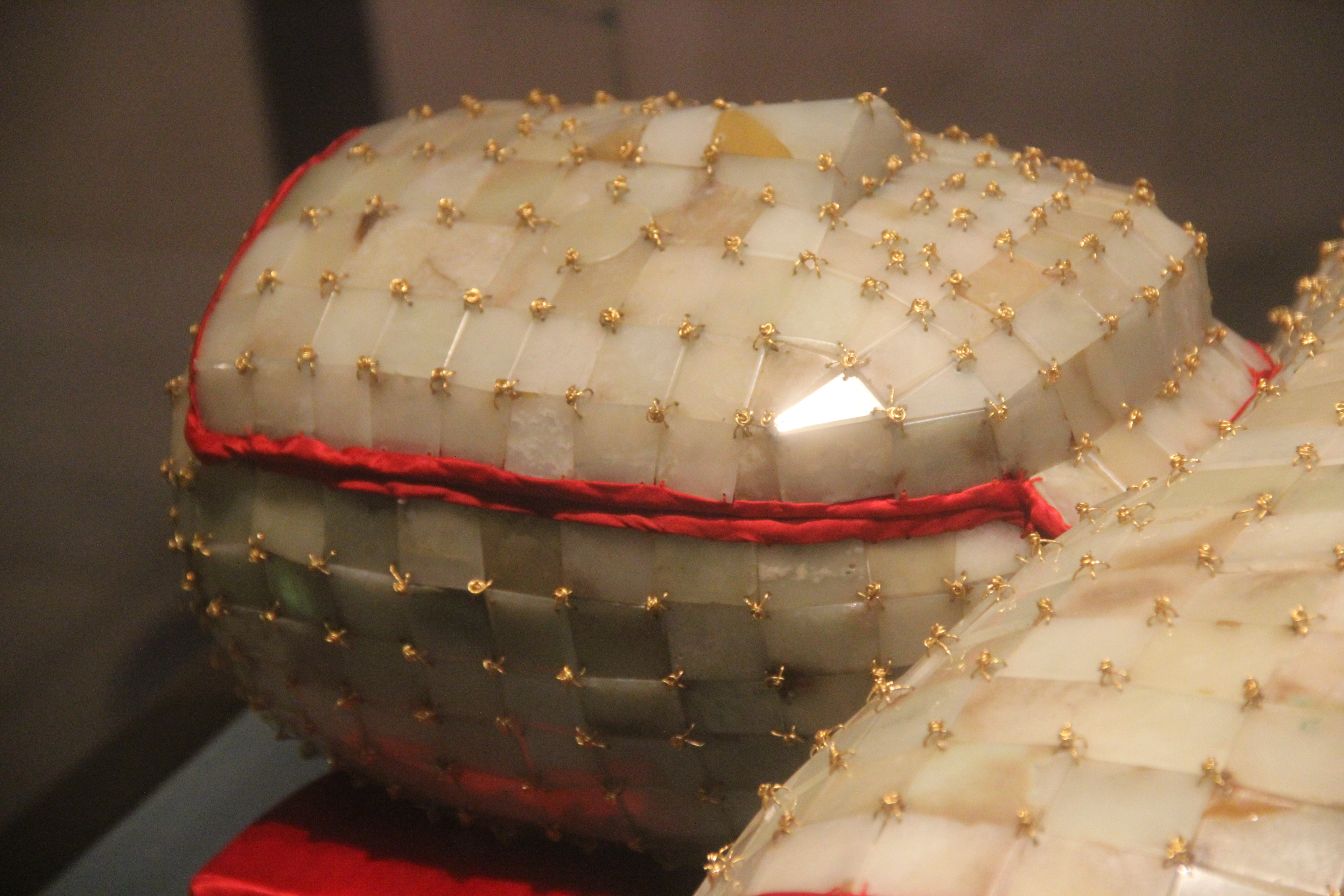
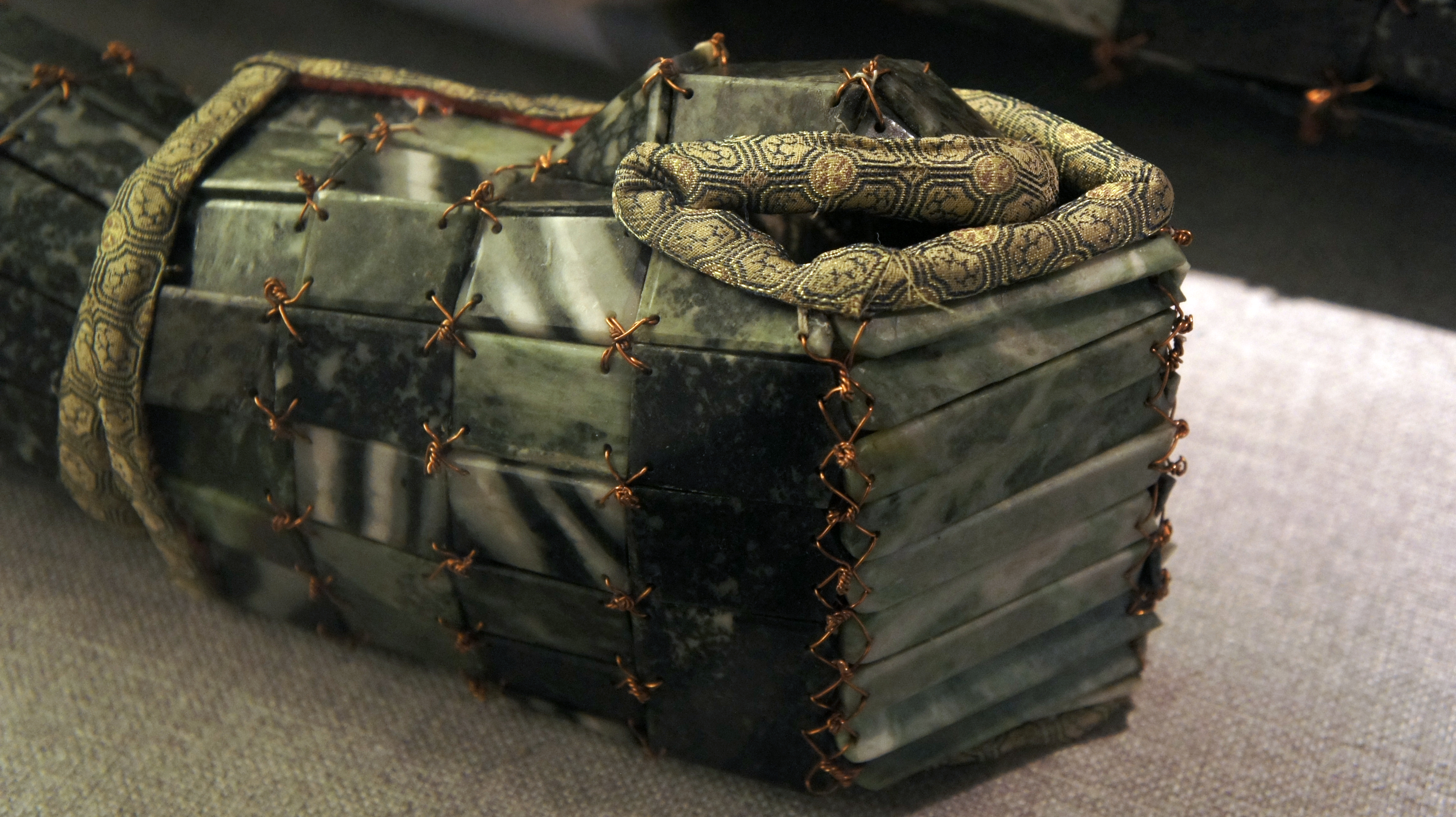
Corpses, such as that of emperor Liu Sheng and his wife the princess Dou Wan, have been found in spectacular jade suits made of thousands of small plaques sewn together with gold thread. The Chinese believed that jade would protect the corpses from decay; it was a symbol of life and vitality. Liu Sheng's tomb in Mancheng, Hebei was built like an actual house with horses, stables, windows, storerooms with cookbooks and even a bathroom! Most of the 2,800 goods found in this tomb are unique and include the jade suits and other jade products, the famous Changxin Palace lantern and a gold-inlaid furnace.

The making of a jade burial suit was no easy job, because it had strict requirements on techniques. First, jade materials transported from far-away places were processed into thousands of small jade pieces of certain shapes and sizes after lots of procedures; second, each jade piece was polished and drilled, with the shapes and sizes of the holes undergoing special scrutiny and delicate processing; third, a lot of specially made gold, silver or copper threads were used to join the jade pieces. The finished suites were respectively called "gold thread sewn jade burial suit", "silver thread sewn jade burial suit" and "copper thread sewn jade burial suit". The shape of the suit was the same as a human body. The cost of making a medium-sized jade burial suit was almost equal to the property values of 100 then middle-class families put together. You can have an idea what an extravagance the suit was.

The most representative jade suit is the gold thread sewn jade suit found in the tomb of Liu Sheng in Mancheng, Hebei Province. It consists of 2,498 jade plates of different sizes that are joined with gold threads of over 1,000 grams. It was completed by more than 100 craftsmen in over two years.  Jade suits were first documented in literature around AD 320, although there is archaeological proof of their existence over half a millennium before. However, their existence wasn’t confirmed until 1968, when the tomb of Prince Liu Sheng and his wife Princess Dou Wan of the Han Dynasty was discovered. Believed to be one of the most important archaeological finds of the 20th century, the undisturbed tomb was unearthed in the Hebei Province behind a wall of iron between two brick walls and a corridor packed with stone.


Read More
Powered by Blogger.

Popular Posts