Showing posts with label grave. Show all posts

Viking's unlucky trip to Dorset

In 2009 during the construction of the Weymouth Relief Road in Dorset archaeologists from Oxford made one of the most exciting, and disturbing, archaeological discoveries in Britain in recent years.

They have found a mass grave of 54 skeletons and 51 heads of men executed some time between AD 910 and 1030. Naked, beheaded, and tangled, the bodies of 51 young males  have been identified as brutally slain Vikings. For more than 1,000 years this bloody roadside act was forgotten, one of many atrocities in the long and violent struggle between the Anglo-Saxons and the Norse invaders. On November 13, A.D. 1002, Æthelred Unræd, ruler of the English kingdom of Wessex, “ordered slain all the Danish men who were in England,” according to a royal charter. This drastic step was not taken on a whim, but was the product of 200 years of Anglo-Saxon frustration and fear.

The 54 skeletons were all of males, almost all aged from their late teens to around 25 years old, with a handful of older individuals. They had all been killed at the same time with a large, very sharp weapon such as a sword. They had not been cleanly killed, as many of them had suffered multiple blows to the vertebrae, jawbones and skulls. One man had his hands sliced through, suggesting that he had attempted to grab the sword as it was being swung towards him.

They had no obvious battle wounds and were most likely captives. Judging from the lack of any remains of clothing or other possessions, they had probably been naked when they were thrown into the pit. There are more bodies than skulls, suggesting that a couple of the heads – perhaps of high-ranking individuals – were kept as souvenirs or put on stakes.

A chemical analysis of teeth from ten of the men showed they grew up in countries where the climate is far colder than Britain - with one individual thought to have come from within the Arctic Circle. Now we know that they were Viking mercenaries. We know that for their teeth, which some of them had grooves filed into his two front teeth. Archaeologists think it may have been designed to frighten opponents or show status as a great fighter. This is a typical for Jomsvikings, a group of warriors from eastern Denmark who were feared across Europe and became so notorious they spawned their own saga. The Jomsvikings were forbidden from showing fear, and if executed would request to face the blow as proof of their bravery.


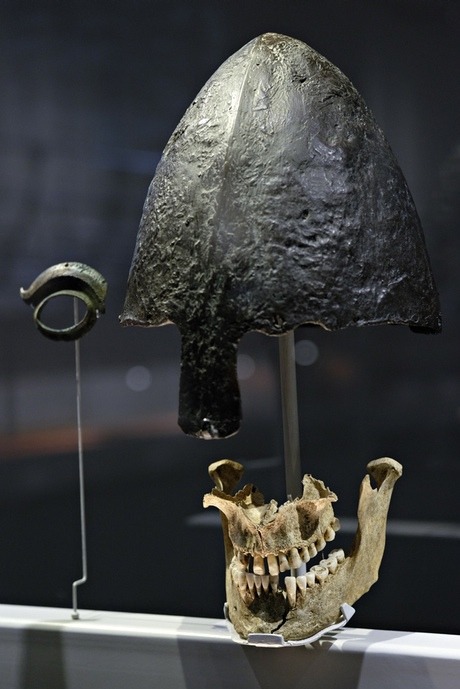
Few kilometers from the mass execution archaeologist have found helmet, axe and jawbone belonging to high rank Viking. There is a speculation that it's one of three missing heads from the Dorset execution. Maybe a leader of band whose head was taken as a trophy? Dating of the helmet gave us an answer that it's highly possible. 

Not only is it one of the most dramatic Viking finds of recent years, it is particularly important in providing a very different perspective to the usual view of Viking military success in England in that period





Read More

To be immortal - chinese jade burial suites, 2200 years old.

Just 15 of the extraordinary head-to-toe jade suits that promised immortality to the Chinese imperial family have ever been found. During the reign of Chinese dynasties, the ancient Chinese believed that when a person dies, he or she entered into the after life. Death was comprehended as a prolongation of life, and an emperor's mausoleum was his after-life palace, mirroring his regal life on earth. All of the daily comforts of their past life such as servants, attendants, objects, pets, wives, guardians, concubines, food and drink were to be provided for them in the after life. This was accomplished by burying all of these things with the deceased when they died. As an ancient Chinese philosopher said, "Treat death as life." It was not uncommon to kill people in order to be buried with their master, but as dynasties evolved clay replicas replaced the real thing.

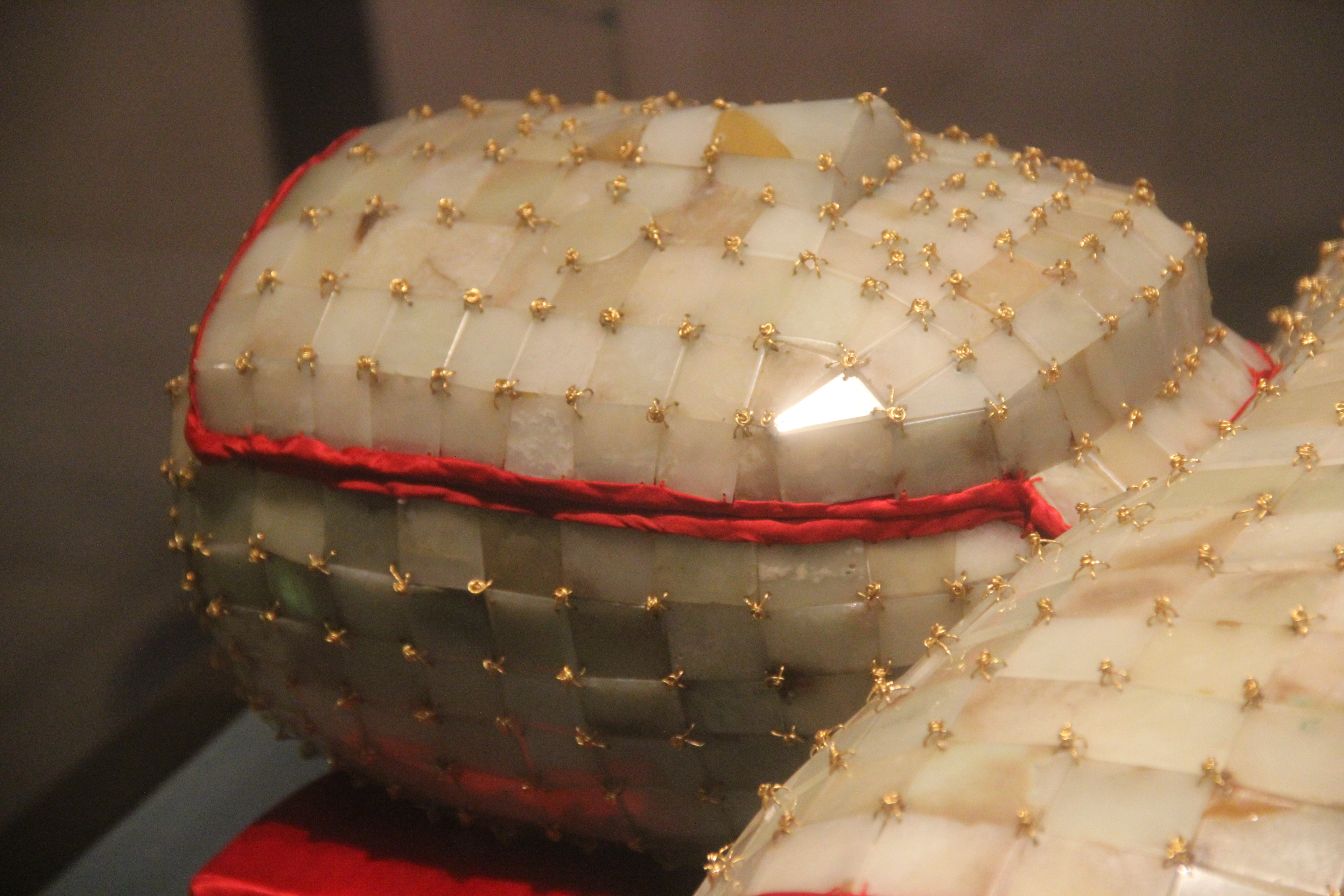
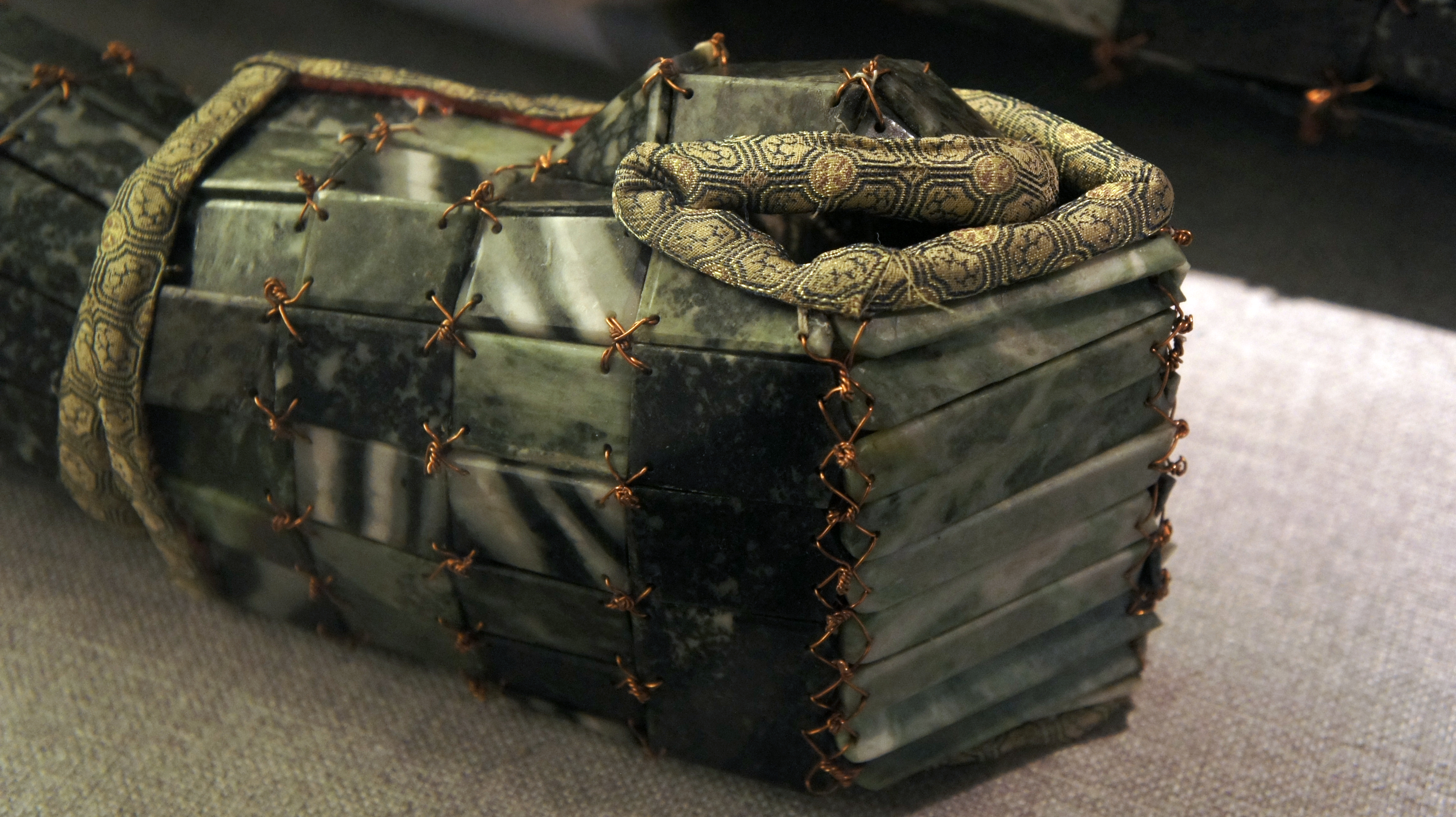
Corpses, such as that of emperor Liu Sheng and his wife the princess Dou Wan, have been found in spectacular jade suits made of thousands of small plaques sewn together with gold thread. The Chinese believed that jade would protect the corpses from decay; it was a symbol of life and vitality. Liu Sheng's tomb in Mancheng, Hebei was built like an actual house with horses, stables, windows, storerooms with cookbooks and even a bathroom! Most of the 2,800 goods found in this tomb are unique and include the jade suits and other jade products, the famous Changxin Palace lantern and a gold-inlaid furnace.

The making of a jade burial suit was no easy job, because it had strict requirements on techniques. First, jade materials transported from far-away places were processed into thousands of small jade pieces of certain shapes and sizes after lots of procedures; second, each jade piece was polished and drilled, with the shapes and sizes of the holes undergoing special scrutiny and delicate processing; third, a lot of specially made gold, silver or copper threads were used to join the jade pieces. The finished suites were respectively called "gold thread sewn jade burial suit", "silver thread sewn jade burial suit" and "copper thread sewn jade burial suit". The shape of the suit was the same as a human body. The cost of making a medium-sized jade burial suit was almost equal to the property values of 100 then middle-class families put together. You can have an idea what an extravagance the suit was.

The most representative jade suit is the gold thread sewn jade suit found in the tomb of Liu Sheng in Mancheng, Hebei Province. It consists of 2,498 jade plates of different sizes that are joined with gold threads of over 1,000 grams. It was completed by more than 100 craftsmen in over two years.  Jade suits were first documented in literature around AD 320, although there is archaeological proof of their existence over half a millennium before. However, their existence wasn’t confirmed until 1968, when the tomb of Prince Liu Sheng and his wife Princess Dou Wan of the Han Dynasty was discovered. Believed to be one of the most important archaeological finds of the 20th century, the undisturbed tomb was unearthed in the Hebei Province behind a wall of iron between two brick walls and a corridor packed with stone.


Read More

Corinthian helmet from the Battle of Marathon (490 BC) found with the warrior's skull inside.

The Corinthian helmet type is one of the most immediately recognisable types of helmet, romantically associated with the great heroes of Ancient Greece, even by the Ancient Greeks themselves who rapidly moved to helmet types with better visibility, but still depicted their heroes in these helmets. In modern portrayals of Ancient Greek warriors, it is always the Corinthian type that is depicted, although often modified to suit the look desired - for instance in one movie the helmet was modified to expose more of the face of the actor.

 It was a helmet made of bronze which in its later styles covered the entire head and neck, with slits for the eyes and mouth. A large curved projection protected the nape of the neck. Out of combat, a Greek hoplite would wear the helmet tipped upward for comfort. This practice gave rise to a series of variant forms in Italy, where the slits were almost closed, since the helmet was no longer pulled over the face but worn cap-like. Although the classical Corinthian helmet fell out of use among the Greeks in favour of more open types, the Italo-Corinthian types remained in use until the 1st century AD, being used, among others, by the Roman army.

This helmet was excavated by George Nugent-Grenville, 2nd Baron Nugent of Carlanstown, on the Plain of Marathon in 1834, according to letters from Sutton dated to 2 & 20 August 1826.

2500 years earlier, on the morning of September 17, 490 BC, some 10,000 Greeks stood assembled on the plain of Marathon, preparing to fight to the last man. Behind them lay everything they held dear: their city, their homes, their families. In front of the outnumbered Greeks stood the assembled forces of the Persian empire, a seemingly invincible army with revenge, pillage and plunder on its mind. The two sides faced each another directly, waiting for the fight to start. The Athenians stalled for days, anticipating reinforcements promised by Sparta. But they knew they could not wait for long. The Persians, expecting as easy a victory as they had won against enemies so many times before, were in no hurry.

The Greeks, knowing the time for battle had come, began to move forward. Ostensibly, they advanced with focus and purpose, but beneath this firm veneer, as they looked on a vastly larger enemy — at least twice their number — many must have been fearful of what was to come. The Persian archers sat with their bows drawn, ready to loose a barrage of arrows that would send fear and confusion through the Greek ranks .Eventually, though, the infantry on both sides engaged in battle. Moving towards each other and perhaps with the Greeks running the final 400 metres whilst undoubtedly under fire from the Persian archers, the two armies clashed.

Few hours later the bloody battle ended. Herodotus records that 6,400 Persian bodies were counted on the battlefield, and it is unknown how many more perished in the swamps. The Athenians lost 192 men and the Plataeans 11.

Pheidippides giving word of victory at the Battle of Marathon
Luc-Olivier Merson
One final legend of Marathon and one which has carried its name up to the present day is Herodotus’ account of a long-distance messenger (hēmerodromos) named Phidippides. He was sent to enlist the help of the Spartans before the battle and he ran to Sparta, first stopping at Athens, a total distance of 240 km (a feat repeated by an athlete in 1983 CE). Later sources, starting with Plutarch in the 1st century CE, confuse this story with another messenger sent from Marathon after the battle to announce victory and warn of the Persian fleet’s imminent arrival in Athens. In any case, it was from this second legend that a race - covering the same distance as the 42 kilometres between Marathon and Athens - was established in the first revival of the Olympic Games in 1896 CE to commemorate ancient Greek sporting ideals and the original games at Olympia. Fittingly, the first marathon race was won by a Greek, Spiridon Louis.

Mound (soros) in which the Athenian dead were buried after the battle

Read More

In the desert landscape of northeastern Saudia Arabia you will find Qasr al-Farid aka “The Lonely Castle”. Built in the first century A.D.


Mada'in Saleh is an ancient city of pre-Islamic period located in northern Saudi Arabia, about 1,400 km to the north of capital Riyadh. It lies in a strategic position on one of the most important ancient trade routes, which linked the south of the Arabian peninsula to the north, as well as to the great economic and cultural centres of Mesopotamia, Syria and Egypt.
It is considered one of the most important and oldest ancient cities in the country and the second largest city of the Nabateans who rules in the first century AD. Today, Mada'in Saleh is an archeologically important site with majestic ruins that are often compared with those of Petra. The most stunning among these ruins and the most iconic symbol of Mada’in Saleh is Qasr al-Farid, rising four stories tall not far from the center of the ancient Nabataean city of Hegra.

“Qasr al-Farid” means “the lonely castle”, so called because it stands completely isolated from the others. But despite its fanciful name, Qasr al-Farid is only a tomb. It was carved out of a single rock sometime in the first century A.D., but its facade was never finished which makes the tomb an interesting study. The heavily chiselled surface of the lower third documents how these tombs were fashioned from the top down. Qasr al-Farid is just one of ninety-odd such monumental tombs carved here during the heyday of the Nabataeans.
Read More
Powered by Blogger.

Popular Posts